
Threads That Start With a Conversation
For ESEA Heritage Month and this year’s theme, ‘Evolving Threads,’ we are pleased to share a piece by Shelly Lau, Senior Transport and Chartered Town Planner at Mayer Brown Ltd. Shelly’s reflections trace how identity and belonging are shaped not through grand gestures, but through everyday interactions — conversations over coffee, moments of advocacy, and the quiet cultural cues that influence how we show up at work and with one another. Her story highlights the role of Cultural Intelligence: the ability to recognise different cultural norms, adapt our communication, and build genuine connection across backgrounds. In exploring collective versus individualistic mindsets, championing others, and creating space for people to be heard, Shelly shows how these small acts become the evolving threads that strengthen community, open doors, and help us carry each other forward.
For ESEA Heritage Month and this year’s theme, ‘Evolving Threads,’ we are pleased to share a piece by Shelly Lau, Senior Transport and Chartered Town Planner at Mayer Brown Ltd. Shelly’s reflections trace how identity and belonging are shaped not through grand gestures, but through everyday interactions — conversations over coffee, moments of advocacy, and the quiet cultural cues that influence how we show up at work and with one another. Her story highlights the role of Cultural Intelligence: the ability to recognise different cultural norms, adapt our communication, and build genuine connection across backgrounds. In exploring collective versus individualistic mindsets, championing others, and creating space for people to be heard, Shelly shows how these small acts become the evolving threads that strengthen community, open doors, and help us carry each other forward.
By Shelly Lau
A few years ago, I came to the UK alone, knowing no one. The first thing I did – and I’m still doing today – was take every opportunity to meet new people in person and build rapport with those I met. Conversations sparked, the journey began, and I have kept evolving ever since.
I didn’t stop when I got my first job; I’m enthusiastic about sharing my journey and offering personalized career advice. In particular, I share tips on preparing a British-style CV and job interviews with others whenever I have the chance. These conversations and encounters brought me the opportunity to meet Shelley Purchon at English Unlocked. Together, we created ‘Job Seeking Tips for Hong Kongers’ and co-host a workshop to change the way other Hongkongers apply for jobs, so they can find their place in the UK job market. Shelley has a long, well-established career teaching English as a Foreign Language to people from around the world. As we exchange thoughts and ideas, I gain a better understanding of how our different mindsets and assumptions shape the way we present ourselves and approach others.
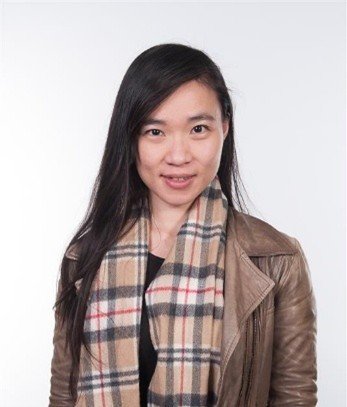
Shelly Lau
Being Seen, Being Heard, Championing Others
While I built a varied and successful career after moving to the UK, I still love hearing stories from others – including those with minority and/or mixed cultural backgrounds – through which I keep learning and broadening my horizons. When I worked at Arup, I made time for lunch and coffee breaks with colleagues from various backgrounds. Being open and curious, without bias or judgement, is key. I listen to every ‘small’ thing they share, whether it’s work-related or personal. What doesn’t bother me might mean a great deal to someone else.
People from collective cultures tend to share success and use the word “we”, whereas those from individualistic cultures tend to highlight personal wins and use the word “I”. I find it useful to give credit to colleagues who help me during our weekly resourcing calls, especially those who quietly do an amazing job without saying a word. It’s just as critical for seniors and leadership to set this culture. I once had a project manager from another team email my line manager to recognize my skills and contributions to his project. Depending on the organizational power of the person championing you, they may find it difficult to recommend you for promotion – but it’s often easier for them to advocate and open doors instead. I was once recommended by a work buddy to get involved in a high-profile project led by another team.
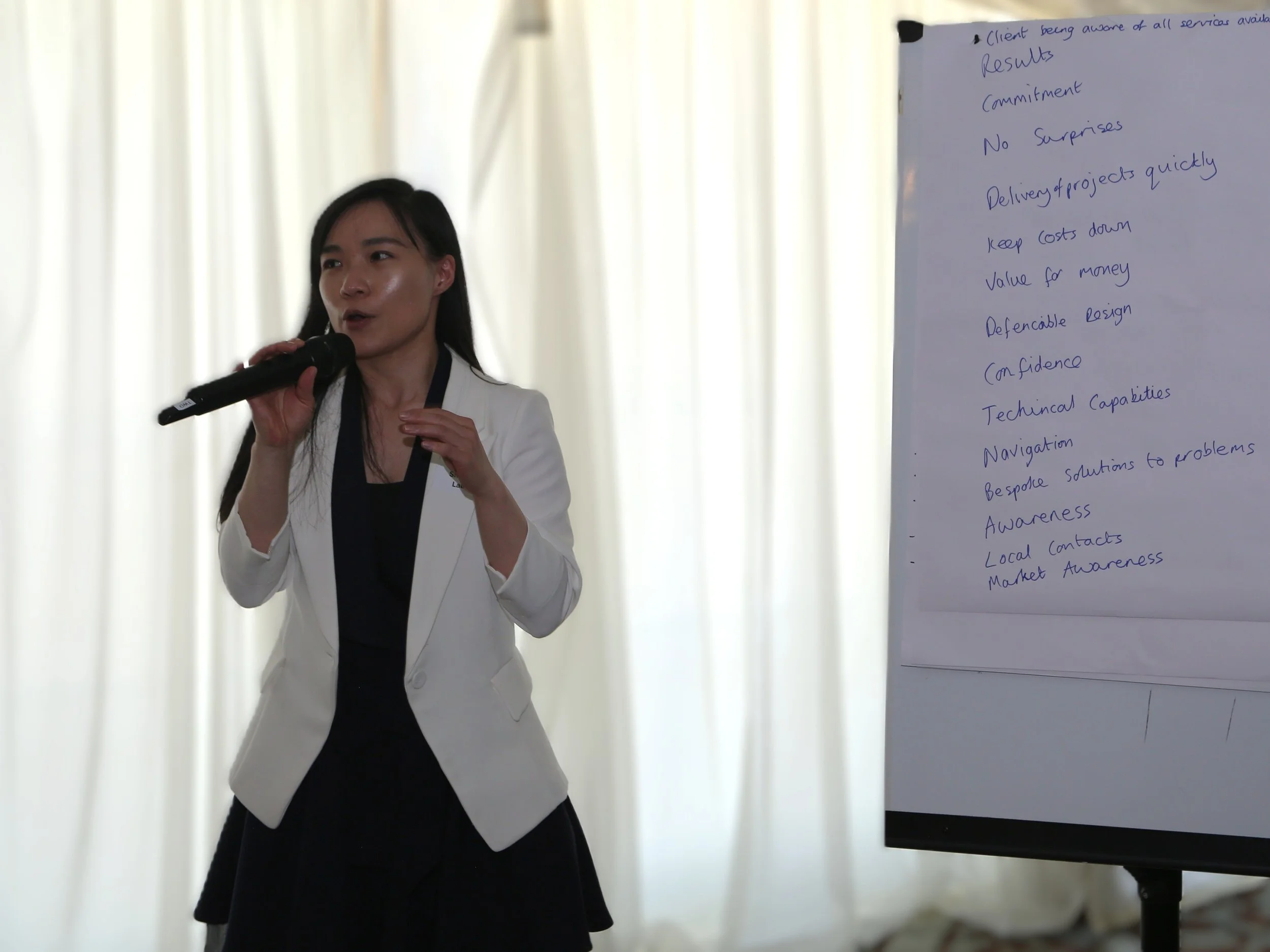
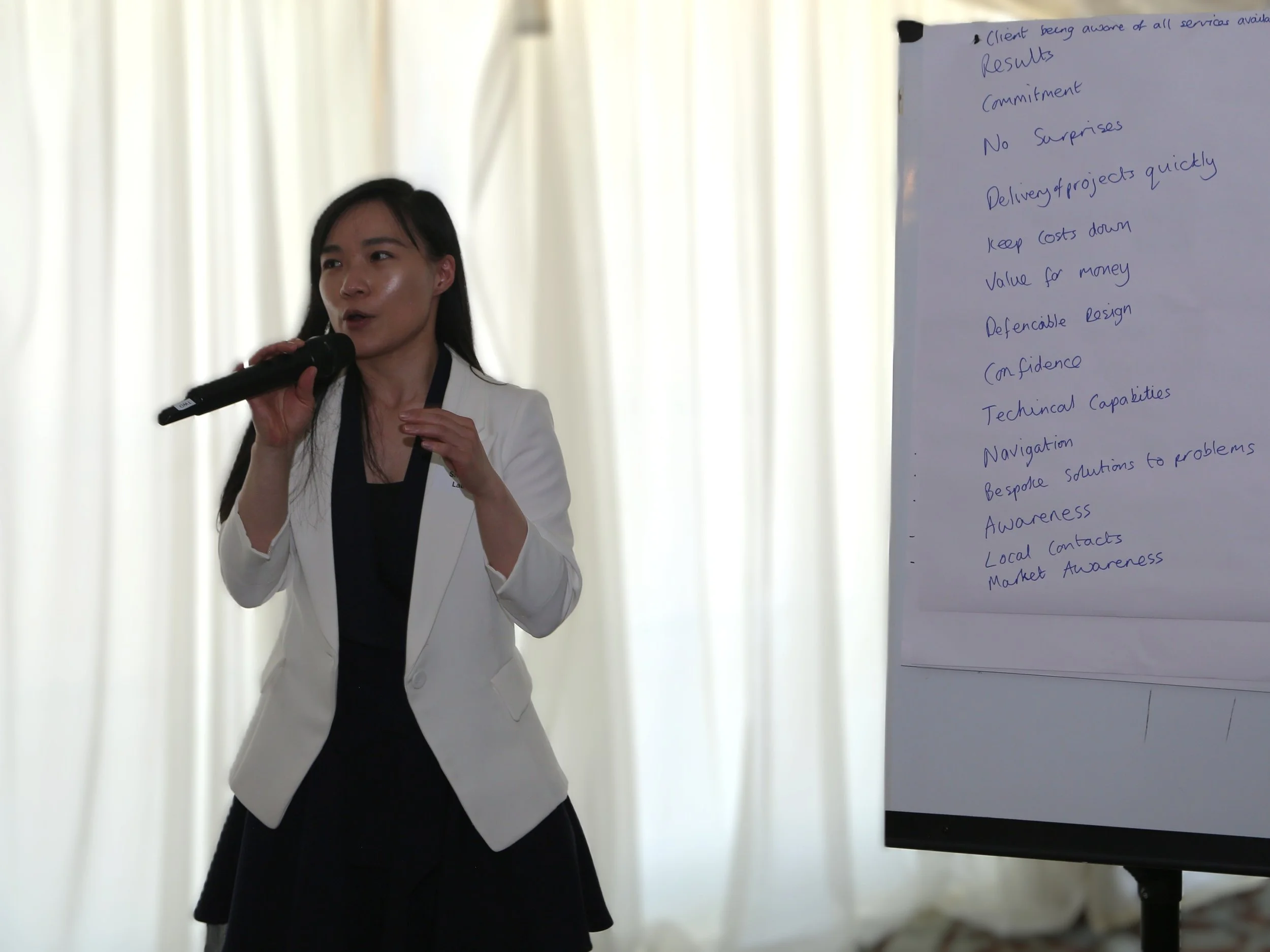
Shelly sharing key points from a group discussion around building rapport with clients on the Employee Away Days 2026 at Mayer Brown.
Another challenge is that I sometimes stay silent during a heated debate to keep the peace, which can be mistaken by others as a lack of interest or intelligence. People from collective cultures tend to think of others and protect their feelings first in a meeting; we tend not to provoke public disagreement that causes people to lose face or feel shame. That’s why it’s so important that we pay attention and call out bias when it happens. I’m still learning to find the courage to speak up for others in the room. Often, I take the conversation offline and speak to both sides, to facilitate communication and create a more inclusive space wherever I can. Sometimes it only takes a few coffee breaks to make others feel heard and valued.
The Threads We Weave
None of this is grand gesture-making. It’s a CV tip over coffee, a quiet word of credit on a call, a recognition email, a colleague who takes the conversation offline so another person is heard. On their own, these acts are modest. Together, they become the threads that hold our community up – flexible enough to adapt, strong enough to carry each other forward. We tend to notice a thread only once it’s missing. Let’s not wait that long to value – and keep weaving – our own.
Learn more about ESEA Month on our dedicated page here.
Food as the Mirror of Personal and Cultural Identity
As part of this 2026 ESEA Heritage Month theme, ‘Evolving Threads,’ we are delighted to share a personal reflection from Jiyoung Jo, Senior Cities Specialist at ING Media. In her piece, Jiyoung traces how food becomes a vessel for memory, migration and identity – revealing the ways our cultural threads shift, adapt and take on new meaning as we move through the world.
As part of this year’s East and South East Asian Heritage Month theme, ‘Evolving Threads,’ we are delighted to share a personal reflection from Jiyoung Jo, Senior Cities Specialist at ING Media. In her piece, Jiyoung traces how food becomes a vessel for memory, migration and identity – revealing the ways our cultural threads shift, adapt and take on new meaning as we move through the world.
By Jiyoung Jo
Many people find themselves looking back across their lives and reflecting on a memory or experience that has stayed with them. Very often, such a moment involves food, a medium that engages all five senses.
Having only the option of choosing one elective module across four years of university, I selected mine with extreme care. I ended up in Global Noodles, a class where my homework consisted of trying different noodle cuisines from around the world. The final exam involved cooking a noodle dish of my own choice. Initially drawn in by the enticing prospect of slurping noodles in class, I had no idea that it would go on to have such a resounding impact on my life.
The dish I chose for the final exam was a South Korean hand-pulled noodle called sujebi, which my mum used to make on the rare occasion when she didn’t feel like “cooking”. It is made by tearing flour dough by hand into a hot anchovy-kelp broth alongside potatoes, Aehobak (Korean squash) and onions. It sounds like a simple dish, but I soon discovered that the story behind how these ingredients came together was far more complicated than it seemed.

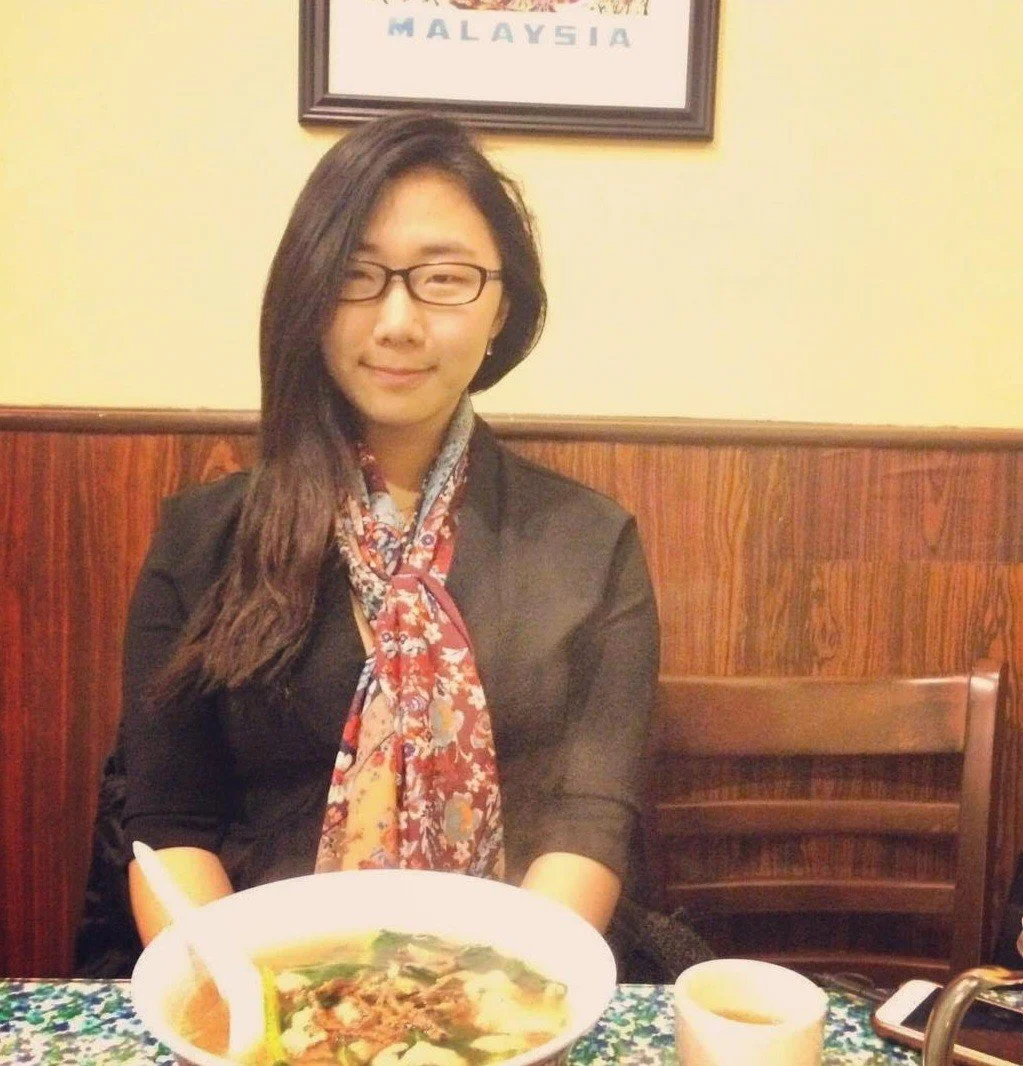
One of Jiyoung’s Global Noodles class assignments from 2017 was to go to a restaurant serving a cultural dish they had never tried before. That was her first time having Malaysian laksa.
I had assumed most of these ingredients were indigenous to Korea but I couldn't have been more wrong. I discovered that tracing their history led me straight into some of the most dramatic moments in my country's past. Aehobak was introduced in the seventeenth century, around the time of the Imjin War, while onions and potatoes arrived between the nineteenth and twentieth centuries via trade routes with China.
The dish itself can be traced back to the aristocracy of the Goryeo Dynasty, yet today it is regarded as a commoner's comfort food. That shift in status comes down to its main ingredient: flour. Introduced to the masses by America as wartime food aid during the Korean War, flour left Koreans unsure how to quickly popularise and consume it as an alternative to rice. This led to a nationwide post-war campaign in the 1960s (the Bunsik campaign) promoting the benefits of flour as a source of physical strength. The same movement gave rise to other well-known dishes, such as wheat tteokbokki (spicy rice cake), deep-fried twigim, corn dogs and many more, all of which now sit at the heart of the K-food culture spreading across the globe.
“Having spent most of my life outside Korea, I find that food is my main way of connecting with my roots. Learning about the ingredients that make up this quintessentially Korean dish, and then cooking and serving it as part of my final exam, helped me understand the tenacity and adaptability of my ancestors. They survived countless wars and invasions, and adjusted to decades of change brought by international trade. And that history is part of what led me to where I am.”
Through this lens, I began to see the fallacy of "authenticity.” Today no one makes sujebi according to the exact Goryeo Dynasty recipe. What makes a food truly meaningful are the values it reflects and the cultural, historical and emotional memory it evokes, from the collective story of South Korea to personal memories with my mum.
Now, having settled in London, I am reinventing sujebi on my own terms: swapping anchovy-kelp broth for Worcestershire sauce, and Aehobak for courgette. It is by no means an "authentic" sujebi. But it nonetheless reflects my own journey as an immigrant who moved far from home, yet still yearns to stay connected to her roots.
Learn more about ESEA Month on our dedicated page here.

Roots and Routes – reflections from a recent visit back home in Southeast Asia
September is East and Southeast Asian (ESEA) Heritage Month, which was established in the UK to honour and celebrate the culture, diversity, history and contributions of East and South East Asian communities across the UK and raise awareness for those who are not East and/or South East Asian.
The theme for 2023 was, "Roots and Routes", an opportunity for one of our members, Haziq Ariffin, Account Manager at ING Media, to reflect on a visit back home to Malaysia and Singapore.
“The connection to nature is inherently important to Southeast Asian communities. For Malaysians, the homeland is referred to as "Tanah Air", an amalgamation of two words: "Tanah" which means Land" and "Air" is "Water"."
Please note that this article was published prior to the new brand name of PREACH Inclusion® on 25 April 2024, so you will notice references to BAME in Property.
September is East and Southeast Asian (ESEA) Heritage Month, which was established in the UK to honour and celebrate the culture, diversity, history and contributions of East and South East Asian communities across the UK and raise awareness for those who are not East and/or South East Asian.
The theme for 2023, "Roots and Routes", was an opportunity for one of our members, Haziq Ariffin, Account Manager at ING Media, to reflect on his recent travels back home in Malaysia and Singapore.
For some, Southeast Asia is a gap year destination. But as one of the most culturally diverse regions of the world, it has a lot to offer, especially as we continue moving towards a more globalised society.
Made up of eleven countries, Southeast Asia has always been an important global trading hub, forming a bridge between the West and the East. Centuries of intercontinental trade and migration is one of the reasons the region boasts a rich tapestry of ethnicities, languages, food, and traditions. Today, partly due to political and economic conditions, there is also a large contingent of Southeast Asian diaspora across the world, including in the UK. So, what can the built environment industry learn from a Southeast Asian perspective on "Roots and Routes"?
“The connection to nature is inherently important to Southeast Asian communities. For Malaysians, the homeland is referred to as "Tanah Air", an amalgamation of two words: "Tanah" which means Land" and "Air" is "Water"."
To take the theme quite literally, the connection to nature is inherently important to Southeast Asian communities. For Malaysians, the homeland is referred to as "Tanah Air", an amalgamation of two words: "Tanah" which means Land" and "Air" is "Water". Southeast Asia as a whole is home to nearly 15% of the world's tropical rainforest and the Coral Triangle, one of eight major coral reef zones in the world. But it is also one of the most vulnerable regions to climate change. Heat waves, floods, and droughts are becoming increasingly common. In light of this, in recent years there has been more attention given to alternative construction materials, such as bamboo, and building on indigenous knowledge to develop more sustainable ways of living.
“Originally constructed by Indian Muslim Traders in the 18th century, the mosque is an iconic symbol of the region's cultural and religious diversity."
Reflecting on "Routes", during my recent trip, I also visited Masjid Kampung Kling, a timber mosque in Malacca, Malaysia. The port city, recognised as a UNESCO World Heritage Site, was a historically significant centre of trade and cultural exchange. Originally constructed by Indian Muslim Traders in the 18th century, the mosque is an iconic symbol of the region's cultural and religious diversity. The main hall is a Malay-style wooden structure with intricate tile work and carvings, featuring a blend of various cultural influences, including Javanese, Sumatran, Indian and Chinese. European influences can be seen by the colonnade of Corinthian columns which hold up the tiered roof. And strikingly, its minaret resembles a pagoda, built entirely of masonry. The mosque is truly an architectural smorgasbord reflecting the cultural diversity that has shaped the region over the centuries.

Masjid Kampung Kling, Malacca, Malaysia.
This is just the third year that the UK is celebrating East and Southeast Asian Heritage Month, but I hope we continue to celebrate the rich and colourful cultures that the East and Southeast Asian diaspora brings to the world.