
In conversation with Sarah Hayford, Founder of The Land Collective and Managing Director of Sqft Digital
Inspirational, determined and empowering. These are the three words I would use to describe Sarah Hayford, a young entrepreneur, with two, growing businesses in the real estate sector. In this feature BAME in Property founder, Priya Shah, digs deep into what has shaped Sarah’s upbringing, her education and how she has ended up where she is today. There’s a saying that ‘you rise by lifting others’, and Sarah has clearly shown that helping others is just one of many keys to her success. With a couple of awards under her belt already, this rising star isn’t going anywhere, she’s here to stay and transform the real state industry for the better.
Please note that this article was published prior to the new brand name of PREACH Inclusion® on 25 April 2024, so you will notice references to BAME in Property.
Inspirational, determined and empowering. These are the three words I would use to describe Sarah Hayford, a young entrepreneur, with two, growing businesses in the real estate sector. In this feature BAME in Property founder, Priya Shah, digs deep into what has shaped Sarah’s upbringing, her education and how she has ended up where she is today. There’s a saying that ‘you rise by lifting others’, and Sarah has clearly shown that helping others is just one of many keys to her success. With a couple of awards under her belt already, this rising star isn’t going anywhere, she’s here to stay and transform the real state industry for the better.
1. Let's start from the beginning, tell us about you, your upbringing, and your education. How did you end up in real estate?
I was born and raised in Harrow to Ghanaian parents, who very naturally wanted me to go into the big money-making and ‘secure’ industries like medicine, finance or law - the only problem was I didn’t like hospitals (and science), absoutely despised maths and numbers, and wasn’t quite cut out for law!
'I was actually never really great at school or academia all together, I always just about scraped by. Rather, I was more practical and learnt by doing.'
I only realised this when I didn’t get the grades I needed to do A-levels at college, I had to re-take a few GCSE’s and re-apply the following year. I managed to get better grades but my college thought I’d struggle with A-levels, so I was re-directed. I remember being absolutely devastated, especially when throughout school and life you’re told that your grades were pretty much the only thing that mattered. At the time, I was very interested in politics and knew that I wanted to study it at university and the only course at my college that was somewhat related to that was a BTEC in Uniformed Public Services, which prepared you for a career in the emergency services or civil service; it was half classroom based and half outdoor/practical and was a fantastic experience, very much suites for my learning style.
I ended up going to the University of Nottingham to study International Relations, which I found super interesting but at a lot of times, didn’t quite enjoy. I craved to do something a bit more practical or at least something with a blend of theory and practical activities. So I took the plunge in my second year and started an interior design diploma alongside my degree. Studying interior design wasn’t completely new to me as it’s something that my dad studied and did for a while as a hobby. It was fun and exciting to do something new and I undertook work placements with some brilliant interior designers in the process, which actually was my route into the real estate industry.
2. Growing up, what was your exposure to real estate? Did you find it easy securing work experience and internships?
'I think I still have all of my rejection emails from firms asking for work experience throughout university'
I didn’t know anyone in real estate at all and I found it extremely difficult initially to get work experience and internships. If it wasn’t for The Land Collective, I think it would have been even more difficult! My only interaction with the sector before learning about it was with Haart Esate Agents and the surveyor that was walking around my house when we were looking to move.
I think I still have all of my rejection emails from firms asking for work experience throughout university, I didn’t get anything until my final year when I came back from my year abroad and only one of my placements was paid. So I had to save up during the year to cover my expenses for these work placements, they paid off in the end but it was quite difficult and it’s something not everyone can do understandably.
3. What inspired you to start The Land Collective?
When I started getting very interested in the sector, I felt as though I had nobody to share my thoughts or discoveries with. I also wanted a place to vent about issues occurring in my local area. At the time, I was also struggling with getting my foot in the door of the industry due to my academic background, so showing something tangible to employers was a big priority. I already had experience in blogging and creating websites etc, so I decided to take that route and see how it went. It slowly began to generate traction when I shared what I was doing with my department head and later, university careers department.
People had great ideas about the ways in which the built environment impacts our lives in different ways, which is why the platform is designed the way it is - it can include and be relevant to absolutely anybody, which is what I find the most exciting to share!
4. You recently quit your full-time job to launch a new business (congrats!), tell us more Yes, quitting a job during a pandemic where people are losing jobs can sound quite insane, but having worked on The Land Collective for over three years and seeing the traction that its developed, it just felt like the right time!
'I launched Sqft Digital out of frustration with the property industry’s visibility amongst students'
My new business is Sqft Digital, a student marketing agency aiming to transform early careers programmes and firms’ engagement with students throughout the academic year. I launched Sqft Digital out of frustration with the property industry’s visibility amongst students and the slow progress of diversity in the sector. Through The Land Collective, we have managed to build a strong and diverse community of students and young professionals who we communicate with in relation to new opportunities across the sector, discussions and research.
We’ll be offering services such as social media management, research design, digital campaigns, student ambassador campaign management and strategy.
5. How important is diversity to you?
'As a Black woman, I’m already hyper-visible in a lot of spaces and especially in the property industry'
It’s a non-negotiable! I believe that at this point in time, nobody has an excuse not to acknowledge the importance of diversity. I’ve seen people and organisations try and cover their backs with the ‘’diversity of thought’’ jacket in order to hide the fact that they don’t have a coherent and actionable diversity and inclusion framework and its just not good enough. It’s very important to me, as a Black woman, I’m already hyper-visible in a lot of spaces and especially in the property industry. So as a business owner and Founder, it’s important that I practice what I preach.
The Land Collective’s team is very diverse, with our team being mostly women, from various different ethnic, educational and cultural backgrounds.
6. What have been the major achievements for you? e.g. awards, recognition etc.
I think definitely winning the BPF Futures Award for ‘Promoting the Industry’ in 2019, the ceremony was at the Houses of Parliament which was amazing and it felt great to be amongst so mant talented professionals across the industry and be recognised for something I’ve worked so hard on!
It has also been an amazing honour to be recognised and shortlisted as a Superhero by EG in their 2020 award series. The pandemic made many things extremely difficult and bleak, but by launching the virtual internship programme for current students interested in the commercial real estate and construction sectors, I hoped to restore a bit of optimism in the industry. It was quite a lengthy and difficult programme to curate but it was definitely worth it!
7. What's next for you and your businesses?
For now, it’s introducing Sqft Digital to the industry! And helping more students make their journey into the built environment sector. Whilst this year has been very difficult, it has also created lots of opportunities to pivot and for change - so I’m very excited about what’s to come.
Thank you Sarah for sharing your inspiring story. Good luck with your businesses, we can’t wait to see them grow further and bring you back for round 2 on the hotseat!
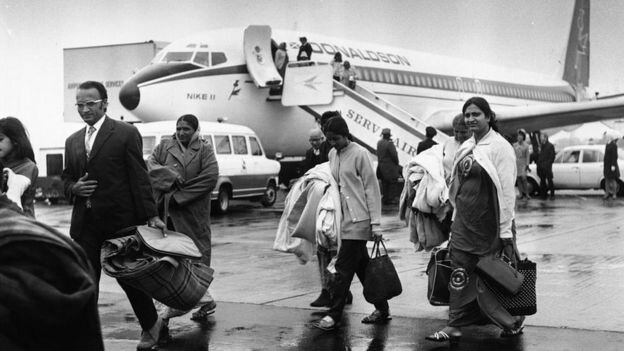
Celebrating the contributions of Ugandan Indians arriving in the UK in the early 1970s
For #SouthAsianHeritageMonth 2020 we celebrate the courage and tenacity of the Ugandan Asians who came to the UK in the toughest of circumstances but who thrived – not just for themselves but for their community too. BAME in Property committee member and Associate at Montagu Evans, Bhavini Shah shares her story of Ugandan Indians and their influence in the UK, especially Leicester.
Please note that this article was published prior to the new brand name of PREACH Inclusion® on 25 April 2024, so you will notice references to BAME in Property.
This #SouthAsianHeritageMonth we celebrate the courage and tenacity of the Ugandan Asians who came to the UK in the toughest of circumstances but who thrived – not just for themselves but for their community too. BAME in Property committee member and Associate at Montagu Evans, Bhavini Shah shares her story of Ugandan Indians and their influence in the UK, especially Leicester.
On 4 August 1972, Idi Amin who was President of Uganda from 1971 to 1979, ordered the expulsion of Uganda’s South Asian minority, giving them 90 days to leave the country, accusing them of “sabotaging Uganda’s economy and encouraging corruption”. Although they formed the minority of the country’s population, it is important to note that official figures suggest that the Ugandan-Asians contributed to circa 90% of Uganda’s tax receipts in 1972.
Official figures suggest that the Ugandan-Asians contributed to circa 90% of Uganda’s tax receipts in 1972.
Estimates of the total number of Ugandan-Asians expelled from Uganda varies but range between 55,000 – 80,000 people with the number of people coming to the UK around 28,000. Ugandan-Asians were pretty-much stripped of their assets and possessions with people even reported being held at gun point by officers before leaving the country to take valuable personal possessions.
A BBC article from 18 September 1972 reports on the first 193 Ugandan-Asians arriving into Stansted Airport that very morning. Some had made their own arrangements with family and friends whilst others were taken to an RAF camp at Stradishall in Suffolk, which was organised by the UK Ugandan Resettlement Board. The families who arrived mostly settled in already established communities in areas such as London and the East Midlands with most Ugandan Asians (around 20,000) settling in Leicester.
It is in business that Ugandan Asians have made the biggest impact because that is where most of their success in Uganda lay. They were highly educated and familiar with British customs. Though Amin took their possessions, they had not lost their skills, university degrees or network of community contacts that would see many of their businesses rise from the ashes. They helped each other to help themselves.
‘you can take someone's money, but you cannot take their know-how.'
Arriving with nothing, they quickly set about trying to rebuild the luxurious lives many had lived in East Africa. Industrialist Manubhai Madhvani, who died in 2011 aged 81, was a regular in the annual Rich Lists. He lost everything in 1972 but his business empire had interests in sugar, brewing and tourism. He once said ‘you can take someone's money, but you cannot take their know-how.'
But it wasn’t easy in the early years. Those with professional skills in teaching or medicine, for example, found that their skills were not transferrable or needed to be topped up. One man, Vinod Kotecha, was a pharmacist in Uganda, but his diploma was not recognised in the UK. He was told by the pharmacy association that he would have to study again from A-levels upwards to get the required qualifications recognised in the UK and he really tried to get these qualifications but he ended up working as filing clerk in the local health authority in Leicester.
School-age Ugandan Asians who finished off their school studies in the UK were less likely to get a job compared to their white counterparts so many young people continued their studies. When young Ugandan Asians did get a job, it was after having to attend more interviews that their white counterparts.
Ugandan Asians had taken over 4,000 grocery stores, 1,000 newsagents, 500 sub-post offices and 300 pharmacies with young Ugandan Asians forming a ‘rising generation’ who were winning a substantial amount of university places and figuring prominently in GCSE results.
One theory from M. H. Freeman’s thesis Asian enterprise in Leicester is that ‘[Ugandan] Asian businessmen have frequently limited themselves to markets where they cannot be perceived as a threat by white people. Significant penetration into the white market has only been achieved in spheres considered undesirable by white traders. Grocery shops, newsagents, taxi-hire, of licences predominate for Asians; areas in which white entrepreneurs have long been in retreat.’ In fact, a Daily Mail article from 11 February 1976, titled ‘Service with a smile back in Britain’, estimated that Ugandan Asians had taken over 4,000 grocery stores, 1,000 newsagents, 500 sub-post offices and 300 pharmacies with young Ugandan Asians forming a ‘rising generation’ who were winning a substantial amount of university places and figuring prominently in GCSE results.
Furthermore, an article by the Loughborough Echo newspaper, dated 10 January 1974, found that 90% of Ugandan Asians in the area were already working. The remaining 10% were either elderly or were unskilled.
‘…we can learn a lot from the Asians living here especially when it comes to family loyalties, respect of children to parents and sheer hard work to gain better standards from a poorer background.'
In Leicester, Ugandan Asians’ presence has transformed the city from a depressed and deprived East Midlands town through the establishment of businesses, creation of community groups, entering politics and reinforcing the importance of education to future generations which has supported the strong communities in Belgrave, Melton Road and Rushey Mead and perhaps even further afield outside of their immediate community: in the opinions page of the Leicester Mercury newspaper from 30 August 1972, a reader noted that ‘…we can learn a lot from the Asians living here especially when it comes to family loyalties, respect of children to parents and sheer hard work to gain better standards from a poorer background.'
It is almost 50 years since Ugandan Asians were expelled from Uganda. Many have since returned but just as many have stayed and had families. The impact of this community is strong and continues today with some high profile success stories:
- Lata Patel who was mayor of Brent from 1996-97;
- Yasmin Alibhai-Brown, MBE, is one of Britain's most distinguished columnists (we note she left Uganda shortly before the official expulsion);
- Asif Din was an accomplished Warwickshire cricketer from 1981 to 1995, whose family arrived in the UK in 1972 with £50 to their name; and
- Tarique Ghaffur, CBE, was promoted to Assisstant Commissioner within the Metroppilitan Police and headed three of the Met’s Operational Command Units: the Directorate of Performance, Review and Standards in 2001; the Specialist Crime Directorate from November 2002; and Central Operations from 2006.
Do you have roots in Uganda too? Share your story in the comments below.
Image: Thousands of Ugandan Asians fled to the UK after Idi Amin ordered their expulsion, Getty Images, posted on the BBC.

Representation in practice - actions speak louder than words
URBED is an urban design company based in Manchester, working across the UK. Senior Consultant Vicky Payne reflects on how the practice tries to operate with representation in mind and the next steps they are planning to take.
In the aftermath of the killing of George Floyd and the resulting resurgence of interest in the Black Lives Matter movement, many of us have reflected on what more we could be doing to fight for an equal and fair society. There is no one-size-fits-all approach to this. Everyone has different levels of influence, different spaces in which they can affect change and different resources (money, energy, time) to contribute. As individuals I think everyone at URBED is personally reflecting on what role they can play, but we are also examining what more we can do as a business.
URBED is an urban design company based in Manchester, working across the UK. Senior Consultant Vicky Payne reflects on how the practice tries to operate with representation in mind and the next steps they are planning to take.
In the aftermath of the killing of George Floyd and the resulting resurgence of interest in the Black Lives Matter movement, many of us have reflected on what more we could be doing to fight for an equal and fair society. There is no one-size-fits-all approach to this. Everyone has different levels of influence, different spaces in which they can affect change and different resources (money, energy, time) to contribute. As individuals I think everyone at URBED is personally reflecting on what role they can play, but we are also examining what more we can do as a business.
It shouldn’t be necessary to explain why representation in the built environment profession is important. We all live in this world, and the groups of people designing places should reflect the people living in them. As Jane Jacobs said:
“Cities have the capability of providing something for everybody, only because, and only when, they are created by everybody”
It also makes sense for us commercially. Statistically speaking it’s not possible that the ‘best people’ for jobs in the industry are those that carry the same characteristics as the people currently dominating our profession. If you’re not recruiting from all available candidates you are limiting the potential of your business. It should not be framed as being ‘nice’ or offering special treatment, it’s about clearing the way so that everyone has equal access and opportunity. This is not going “above and beyond” it’s working towards what should be a baseline level of justice.
It’s worth addressing language briefy. When I wrote the first draft of this I talked about “diversity” and “inclusion”. I felt the need to explain that I meant “diversity” in the broadest sense, incorporating race, class, gender, sexuality, ability etc. Discussing this with colleagues highlighted that focusing on such cataegories and classifications in the first place is “looking down the wrong end of the telescope”. The word “inclusion” also implies that there is someone doing the “including”- a gatekeeper granting access. We’re working to dismantle gates that should never have been erected in the first place. I have used the word “representation” as an alternative where I wasn’t able to rephrase the sentence completely.

Hulme consultation event
URBED’s Manchester office grew out of the tenant’s movement in Hulme in the 90’s and right from the start integrated issues of social justice and sustainability into urban design. In that respect, our heart has always been in the right place. However, it would be foolhardy as a business to assume that a) just because you have good intentions you are doing the right thing and b) that there is an “end point” to becoming an ethical business. It is important that we continually challenge ourselves to do better.
In this blog post I want to set out some of the ways we currently try to operate and provide an idea about the next steps we’re looking to take following this recent period of reflection.
It is worth explaining that URBED is a limited company operating under cooperative rules. This means that almost all of our employees are also directors and we run the business collectively through monthly meetings. This business model has boosted our ability to develop the approaches below; a flat structure creates a safe space to challenge each other’s thinking, and as a smaller company we’re able to make changes in an agile way.
What We’re Doing
Open Minded Hiring
Although for technical roles we tend to request a certain level of academic qualification, we are careful to include the phrase “or equivalent” and focus more on the competencies and skills that we want to see from an applicant than specific academic attainment. We’re always open to interviewing people who have had non-linear or non- traditional routes into the profession, and we take seriously any skills gained in roles outside of the industry. For design roles our selection for interview is based heavily on the submitted portfolio – so applicants are judged on the quality of their work.
In our job descriptions we ensure that information is provided about our enhanced policies for parental leave and time off to care for dependents as well as a highlighting our Mental Health and Wellbeing, Flexible Working and Equal Opportunities policies. Generally, we’re trying to create a situation where no one is deterred from applying.
At interview stage we have a set of questions to guide the conversation and make sure we are finding out what we need to know, but we try to make the tone of the interview as informal as possible. There are no questions designed to catch anyone out and we go into it with the intention of trying to get the best out of the applicant; we’ll ask follow up questions and dig deeper if we sense that there are relevant experiences or skills they haven’t shared with us.
We always try to provide clear and constructive feedback to unsuccessful applicants, letting them know where we thought they did well and areas they could improve. This hopefully increases their chances of getting the next role they interview for.
Flexible Working
Even prior to COVID we had an increasingly flexible approach to working. Over the last couple of years, we have invested in equipment and software to ensure that every employee can work remotely. It really hit home when lockdown came into force how much progress we had made, as everyone transitioned fairly seamlessly into a new way of working.

The URBED office
The ability to work remotely combined with our policies around part time and flexible working hopefully mean that employees are able to integrate their role at URBED into their lives in a way that is manageable and balanced. This obviously makes things easier for people with caring responsibilities, commitments outside work or those with chronic illness, but as with all these measures it really benefits everyone at URBED.
Fair Internships
We believe that internships should be accessible, should be awarded on a fair basis, and should not be economically exploitative. We believe that properly structured and resourced internships make a positive contribution to our industry by helping to develop the skills of new urbanists and by giving access to the industry to people from a broad range of backgrounds.
We do not offer unstructured internships or placements, i.e. those not undertaken as part of a course of education, or work-based scheme supported by the EU, Universities or reputable charities. This is because we feel unpaid and unstructured internships and placements unfairly exclude those who do not have other forms of financial support, or the social networks that allow them to gain access to professional firms.
We will not use internships as a means of providing cheap labour. A reliance on unpaid internships to service fee-earning work is exploitative of the individuals involved and damaging to our industry. We believe that if we expect to be paid as a company for providing a professional service, we should expect the same for the individuals who carry out the work. URBED has a long track record of employing recent graduates and helping them to develop their career. If we need additional staff, we will take a suitable candidate on as an employee – either temporary or permanent - and pay them a reasonable salary.
Mentoring and Outreach
Alongside internships we also offer shorter placements for school and college students to get a feel for working in the urban design industry. We’ve hosted a number of students through the Centre for Sustainable Energy’s “Bright Green Future” initiative, a five- year leadership programme for young people aged between 14 and 17, intended to equip them to be the environmental decision makers of the future.
Last summer we hosted our first student through Arts Emergency, an award-winning mentoring charity and network helping marginalised young people to overcome barriers to participation and success in the creative and cultural industries. The tagline on their website is “the alternative old boy network”. They are a fantastic organisation and we’d encourage any business in the built environment to take a look at their website and get involved.
It is really important when hosting students to make sure you are providing financial support for any travel, food or equipment needs they might have – offering the placement itself is not enough if students can’t afford to get there!

Arts Emergency student Hannah’s urban greening project
A number of our senior staff are engaged in mentorship programmes, partnering with younger people and offering them support and advice about how to get into the industry. We have also participated in a number of outreach projects with schools. Two of our team ran a series of workshops through the RIBA Architecture Ambassadors scheme at a primary school in Oldham, investigating the local built heritage and working with them to design and construct their own buildings out of cardboard.

The “fun house” designed by a primary school student in Oldham
I think it’s common in any industry to get a little jaded or to lose passion for your chosen profession from time to time. Apart from the benefits to the students, working with younger people and welcoming them into your business is an incredible way to re-light that spark. They bring so much energy and curiosity and it’s always such a pleasure to see their work at the end.
Aside from the way we operate as a business, our work also has a significant role to play in working towards greater equality in the built environment.
Designing with Communities
URBED’s approach is to urban design is very focused around consultation and participation. We don’t tend to masterplan and then consult, but try to design in a collaborative way with our clients, stakeholders and communities. We believe the people of a place are its most valuable resource. It is fundamental for local people to be involved in decisions about their towns and neighbourhoods - their input is hugely enriching to the process.

Facilitating Glasshouse urban design training with residents of St Raphaels Wembley
We have refined and tested a number of processes over years through our design work and via training courses developed and run for The Glasshouse. We have developed a rich palette of tools that can be applied in a flexible way to all kinds of projects to allow meaningful collaboration and co-design. These include walkabouts, roundtable workshops, knowledge building presentations, mapping and sketching exercises, design sessions (often with plasticine!) and exhibitions. These techniques are supported by digital tools like websites and survey platforms. We’re currently exploring a wider range of digital, socially distant or time distant consultation techniques following COVID.
Sustainability
We have always tried to achieve environmental and social sustainability in our projects, whether they are at the scale of an individual building or a strategy for a whole region. We take a holistic approach which considers energy and resource use, climate, and transport, but also design quality and economics. We see sustainability not just as an environmental issue but as an economic and social issue that can help create healthy, safe and cohesive communities. The next step in this thinking is the concept of “climate justice”, which I will touch on in the next section.

A home retrofit workshop for householders
We have developed expertise in low-carbon architectural design, particularly in the retrofit of existing buildings. We see this as integral to the environmental sustainability and the long-term success of urban areas, improving health and well-being as well as climate and wider environmental outcomes. Again, this has a strong social and economic aspect and some of our recent work has looked at low-carbon interventions in the context of fuel poverty, health and quality of life. We collaborate frequently with Carbon Coop, an an energy services and advocacy co-operative that helps people and communities to make the radical reductions in home carbon emissions necessary to avoid runaway climate change.
Representative Events
As part of our work we put together events. For the last few years we have run a Manchester based event series called “4x4”, a set of fun, challenging talks about cities and urban issues. In putting together these events we work hard to make sure that we do not create the all-white, all-male panels that crop up so often in the industry. Largely we are able to do this through our own networks and contacts, but we have also found it really helpful to work with organisations like BAME in Property to find great speakers outside our networks. We don’t do this to be worthy – we want to create the most interesting events that we can for our attendees, and having a variety of different voices on our panels is part of that.

2018 Marked the centenary of votes for (some) women and we celebrated with a non-male identifying 4x4.
What We’d Like to Do Next
There’s a lot that we want to do, and recent events have galvanised us towards a more concerted effort.
In terms of our business practices we are currently looking to undertake a series of internal training and education sessions to examine our structures and processes, rebuilding them where necessary. We go into this with an awareness that such training is important, but on it’s own isn’t suffiecient to create lasting, meaningful change. It would be very easy to undertake training and then unconcioulsy revert to type, thinking we have “done our bit”. We’d like any training we undertake to be the start of a much longer process.
We would like to expand awareness about mentoring opportunities in the office, so that all staff are aware that they can provide a beneficial role as a mentor. This might mean an internal skill share, where staff who have worked with mentees talk about their experience and explain how the mentorship was arranged.
We are looking to consciously expand our networks and amplify voices within the industry. So far this has meant looking at who we follow on Twitter and making a concerted effort to follow a wider range of accounts and organisations with a broader range or perspectives on urban issues. Going forward we would like to expand the networking and CPD events that we attend, whether they are in person or online. Ultimately, we’d love to get to a point where we are working with a broader range of clients and collaborators.
We are looking at mental health. Last year we shared our Mental Health and Wellbeing Policy and signed up to the “Where’s your Head At?” workplace manifesto. Part of the manifesto talks about building a diverse and inclusive worksplace, leading to a happier and healthier environment where people feel free to bring their whole selves to work. We are in the process of organising for two members of staff to become Mental Health First Aiders and we are keen to make sure that this training intersects with the work we are doing on diversity and inclusion.
In terms of our project work and research we would like to more deeply integrate issues of social justice into our approach to sustainability. In September 2019 we started a live internal project on the Climate Emergency. We are currently exploring how an awareness of the Climate Emergency can be integrated into everything we do. We have developed a plan for knowledge building, agreeing values and setting objectives. We then intend to develop an approach to the Climate Emergency in all areas of our work (spatial planning, masterplanning, architecture and landscape architecture), ultimately producing guidance and tools. Our intention as we embark on this plan is to focus on the concept of “Climate Justice” which frames global warming as a political and ethical issue. Climate Justice acknowledges that the impacts of climate change will not be borne equally or fairly.
Final Thoughts
I reflected at the start of this post on how everyone has different levels of influence and varying abilities to affect change. The fact that this has turned into such a long blog post illustrates just how much power we have as businesses. Urban design practitioners tend to be a utopian bunch, we talk a great deal about community, placemaking and sustainability - we want to create a better world. I think it’s important in the coming decades that we don’t allow ourselves to be lured into complacency by our own good intentions.
We have power, we have influence and we need to continually challenge ourselves to use it in the best way possible.

Who is Planning My City?
In this blog, Deborah Broomfield, PhD student in Women in Planning at Leeds Beckett University shares her experiences of being a Black woman at university, property management and in the COVID-19 pandemic. She stresses the importance of understanding diverse communities to deliver better planning outcomes, especially for Black communities.
I remember during my MSc studies in Urban and Regional Planning, going to a field trip with the other students to a deprived inner-city area of Birmingham, which was one of our case studies.
The area as were many others; a legacy of the work of British civil engineer, Herbert Manzoni who was credited with wiping away the heritage of Birmingham. No doubt also wiping away communities. It was obvious from my observation, that Herbert also saw the car as more important than people.
In this blog, Deborah Broomfield, PhD student in Women in Planning at Leeds Beckett University shares her experiences of being a Black woman at university, property management and in the COVID-19 pandemic. She stresses the importance of understanding diverse communities to deliver better planning outcomes, especially for Black communities.
I remember during my MSc studies in Urban and Regional Planning, going to a field trip with the other students to a deprived inner-city area of Birmingham, which was one of our case studies.
The area as were many others; a legacy of the work of British civil engineer, Herbert Manzoni who was credited with wiping away the heritage of Birmingham. No doubt also wiping away communities. It was obvious from my observation, that Herbert also saw the car as more important than people.
As the students walked along the winding paths past desolate maisonettes and lonely tower blocks. One of the students described the area as sxxt. His friend commented with an air of contempt about residents not taking care of their homes and, took pleasure in picking the ones that she felt needed tidying up.
I often reflect on that experience, as I did not challenge them directly. I wanted to get through the course.
I am an older Black woman; these are the inner conflicts that we face. I also got on quite well with them and felt a mild sense of embarrassment and awkwardness, as I too live in a deprived inner-city area of Birmingham.
However, I did mention this experience to one of the lecturers who was the module lead. Not forgetting my observation of the lack of Black students on the course. I was one of five out of a total of seventy students. The module lead seemed surprised there were that many, I suppose I did say something. I remembered asking the question, who is planning my city?
Why did I start my blog with this experience? These two young white people are working as spatial planners, they also lived in a village and a gated community. I am not sure whether this is about colour or about disconnect. A similar point was mentioned to me during my MSc dissertation research, relating to the lack of awareness of planners about the communities that they are working with.
The individual I interviewed had met a few planners of colour but had not met any Black planners and what is more with lived experience.
Although I enjoyed my MSc studies. I realised that the curriculum, despite being well delivered was designed for accreditation and employment. Maybe it was the student’s responsibility to widen their horizons by asking why these residents did not tidy the exterior of their homes. To give the course leaders some credit, there was an attempt to introduce real life into the teaching. However, the understandable priority of most students will be employment. Also, is there something about the built environment education and employment process, that requires just enough and not to ask too many questions?
The killing of George Floyd in the U.S by police, but not forgetting all the other lives lost including that of Breonna Taylor, has unleashed a sense of fear and guilt in establishments in the UK. Discussions around racism are being revitalised. I say this because I have heard these discussions many times before.
We live in a diverse country in superdiverse neighbourhoods and I wonder at times, whether those who are employed to support neighbourhoods and develop place, truly understands how it all works. I suppose it takes time and experience.
I recall another experience when working in property management, which was at that time mainly male white and nepotistic. As a female surveyor you had to be "good looking” to be recruited. I worked in learning and development and heard surveyors commenting on the looks of female surveyors. A very senior manager spoke about a Black male surveyor colleague of mine who had dreadlocks. He also happened to like very nice cars. The manager commented while I was in the lift to his colleague, that this surveyor had changed his car again and must be selling drugs.
This is a stereotyped view that Black men who drive nice cars are dope peddlers. It was not that long ago, and I think that says it all.
Hopefully, recent events to include the Covid-19 pandemic will further alert the built environment industry, that work needs to be done to understand the superdiverse communities that live in the UK. Messages should be delivered that planning as an example, is a feasible career choice for a young person of colour and a white person from an area of deprivation. This needs to be done at school, all with the right support. I had examined in my MSc dissertation the question about there being a new type of planner, which is a topic I am hoping to further discuss in my doctorate studies. Authenticity and compassion should be additional competencies, but I suppose it is how we measure them. Boris Johnson and his government have communicated their intention to review the planning system. It will be of interest to see the outcome and the effects on diversity issues.

Black Lives Matter
A short message from our founder, Priya Shah.
The tragic murder of George Floyd has sparked anger, frustration and heartbreak to Black communities in America and around the world. Many other ethnicities have spoken up about the atrocities and racism facing Black people, which is an important action to take.
We would like to remind employers that your Black colleagues might be feeling angry, upset and might need more support. Please consider this over the coming days and weeks.
The outrage we are seeing is part of a deep-rooted structural racism, which Black people around the world face on a daily basis. We all have a responsibility to educate ourselves and call out racism. In the workplace this means getting your ethnic colleague’s name right, for example or calling out that colleague who makes a racist remark - please don’t be a bystander, your inaction can speak volumes.
Those who are in a privilege position can make a difference by doing the above, but also acknowledging how such privileges have reinforced racism in the workplace, and have prevented Black people and other ethnic minorities from having the same opportunities.
Diversity is being invited to the party, inclusion is being asked to dance.
Please note that this article was published prior to the new brand name of PREACH Inclusion® on 25 April 2024, so you will notice references to BAME in Property.
A short message from our founder, Priya Shah.
The tragic murder of George Floyd has sparked anger, frustration and heartbreak to Black communities in America and around the world. Many other ethnicities have spoken up about the atrocities and racism facing Black people, which is an important action to take.
We would like to remind employers that your Black colleagues might be feeling angry, upset and might need more support. Please consider this over the coming days and weeks.
The outrage we are seeing is part of a deep-rooted structural racism, which Black people around the world face on a daily basis. We all have a responsibility to educate ourselves and call out racism. In the workplace this means getting your ethnic colleague’s name right, for example or calling out that colleague who makes a racist remark - please don’t be a bystander, your inaction can speak volumes.
Those who are in a privilege position can make a difference by doing the above, but also acknowledging how such privileges have reinforced racism in the workplace, and have prevented Black people and other ethnic minorities from having the same opportunities.
Diversity is being invited to the party, inclusion is being asked to dance.
This statement was originally posted on our Twitter page.

Marking World Menstrual Health Day - How the property sector can make a difference
Thursday 28 May marks World Menstrual Hygiene Day, a global day that advocates and promotes good menstrual hygiene management (MHM) for all women and girls. This day is marked annually, bringing together non-profits, governments, individuals and the private sector to raise awareness about and break the stigma against MHM, as well as urging governments to make it a priority.
This year, amidst the pandemic, MHM is more important than ever. From access to period products and toilets under lockdown, to cultural stigma in some ethnic minority communities, the period hardship felt by women and girls all over the world has been exacerbated.
For something that has occurred since the beginning of time, it is ridiculous to see that society in general does not prioritise women during their periods. In this piece, BAME in Property founder Priya Shah, talks about some of the challenges women and girls are facing, and the important role the property sector can play to help promote better menstrual hygiene, such as good design and prioritising diversity and inclusion in policy decisions. Priya also talks about how you can support our charity partner, Binti Period during the pandemic and beyond.
Please note that this article was published prior to the new brand name of PREACH Inclusion® on 25 April 2024, so you will notice references to BAME in Property.
Thursday 28 May marks World Menstrual Hygiene Day, a global day that advocates and promotes good menstrual hygiene management (MHM) for all women and girls. This day is marked annually, bringing together non-profits, governments, individuals and the private sector to raise awareness about and break the stigma against MHM, as well as urging governments to make it a priority.
This year, amidst the pandemic, MHM is more important than ever. From access to menstrual products and toilets under lockdown, to cultural stigma in some ethnic minority communities, the period hardship felt by women and girls all over the world has been exacerbated.
For something that has occurred since the beginning of time, it is ridiculous to see that society in general does not prioritise women during their periods. In this piece, BAME in Property founder Priya Shah, talks about some of the challenges women and girls are facing, as well as the important role the property sector can play to help promote better menstrual hygiene, such as good design and prioritising diversity and inclusion in policy decisions. Priya also talks about how you can support our charity partner, Binti Period during the pandemic and beyond.
Access to products
Throughout this pandemic, we’ve seen our supermarkets raided for basic supplies, most notably toilet roll. However, there has been less press coverage on period product shortages, which have also been difficult to find in shops.
Research by Plan International UK showed that almost a third (30%) of girls have had issues either affording or accessing period products during the lockdown.
Over half of these girls (54%) have used toilet paper as an alternative to period products. However, stockpiling toilet paper during the lockdown has made managing periods for these girls more difficult.
The lockdown is also exacerbating period poverty for many young people and their families. Many parents/carers are under increased financial strain, making it more difficult to buy tampons, pads and moon-cups.
Lockdown and poor housing exacerbate period challenges
The pandemic has demonstrated how good housing and a pleasant lockdown experience come hand in hand. We’ve seen how overcrowded homes with no access to open space or even a balcony, make lockdown significantly harder for individuals, usually those who are already experiencing poverty in some capacity.
These challenges intensify an experience that is already difficult for young people due to the stigma around periods.
In overcrowded homes, often with little privacy, this issue is multiplied, when young girls or women feel embarrassed to talk openly about periods or ask for products if they cannot access them, due to fear of shame.
Developing countries and menstrual hygiene
With many developing countries under strict lockdown measures, menstrual hygiene has become an impossible task for millions of women and girls. Imagine living in a slum with multiple generations sharing a tin shack room, public toilets, which are rarely cleaned, and all under immense heat, during lockdown. Add to that mix a period and this becomes an even bigger challenge.
Take India for example, a country that has some of the highest figures of period shaming in the world. The lockdown would make the cultural taboo of having a period even worse and put millions of women and girls in compromised positions, due to not being able to use public toilets safely or isolate appropriately within cramped homes.
In some instances, women are required to separate themselves from male counterparts during their period, as it is considered ‘dirty’, however, lockdown has made this impossible, increasing the risk of shaming and in some cases, domestic violence.
Additionally, communal toilets in slums increase the risk of infections during a girl’s period. During COVID-19, this has become a bigger issue, where communal toilets are cleaned less frequently due to essential workers, such as cleaners, also isolating.
How can the property sector support better menstrual hygiene management?
I believe the property sector can support better menstrual hygiene and health, through the use of good design and prioritising diversity and inclusion in policy decisions. This would include:
- More toilet space for women. Visit any public place and you will always see a longer queue trailing outside the female toilets. This is because females generally take longer in the toilet (due to caring responsibilities sometimes), and longer still when on their periods. (You can read more about this here, where I talk about how planning policy has failed to adequately consider women’s toilet and menstrual needs). It is about time the planning sector allocates more toilet space to females to accommodate for different needs.
- Ensure gender-neutral toilets are not the only option. Although unisex toilets should be welcome, due to embracing diversity and transgender individuals especially, they are simply not for everyone. Some women and girls feel uncomfortable using unisex toilets, due to health or cultural reasons. They do not want to be seen in the same environment as males when using the toilet, so may prefer not to change sanitary products when actually required, further increasing the risk of infections.
It is so important for public buildings to offer the option of separate male and female toilets and this is something that can and should be incorporated into good design.
- Prioritise diversity and inclusion in the property sector. Having greater gender balance and more ethnic diversity in the property sector and the built environment industry more widely, would result in better policy for gendered needs, such as periods. Not only should we be having female and BAME voices around the table, but we should also be inviting them to talk about accessibility and cultural issues, which if not considered, could negatively impact half of society.
- Offer free menstrual products in public toilets. Many of us in the built environmental sector own public places, such as shopping centres. These places could offer free menstrual products to women and girls, if they need them.
No one should be in a position where they cannot access or afford menstrual products. We have the power to ensure that does not happen.
I hope this piece has given you all something to consider this World Menstrual Hygiene Day. I feel privileged to be in a position where I can both afford and access menstrual products, something, which millions of women and girls around the world cannot do. I chose to support Binti Period because I truly believe that every girl deserves period dignity and that the property industry can make some positive changes in this cause.
Please visit Binti Period to learn more about our charity partner and see how you can support their latest campaign to purchase a hand-made protective facemask, to not only support the COVID-19 efforts, but also support the charity in surviving during this pandemic.

A Ramadan like no other, 2020 COVID edition
This year, the holy festival of Ramadan has been different for millions of Muslims around the world, impacting their family and working lives in numerous ways, positive and negative.
As we celebrate Eid this weekend (23 - 24 May 2020), Haaris Lakhani, Finance Manager at Grayling, shares his experience of Ramadan during the COVID-19 pandemic, what he's done differently and what this period has taught him.
How has Ramadan been for you this year in light of the pandemic? What have you and your family done differently?
This year has taught us to see the best in any situation that life brings to you and also adjusting to it as needed. As the majority of people are still isolating, there has also been a bit more time to be creative when it comes to iftar meals. The use of family recipes which were hidden away in books or etched in our memories have come to life as this is one way that we can feel more connected and make Ramadan feel more special.
This year, the holy festival of Ramadan has been different for millions of Muslims around the world, impacting their family and working lives in numerous ways, positive and negative.
As we celebrate Eid this weekend (23 - 24 May 2020), Haaris Lakhani, Finance Manager at Grayling, shares his experience of Ramadan during the COVID-19 pandemic, what he's done differently and what this period has taught him.
How has Ramadan been for you this year in light of the pandemic? What have you and your family done differently?
Ramadan has always been a time where family and friends get together to open their fast, pray and spend quality time together. Usually, there would be Iftar (break of fast) invites at least 3-4 times a week whether that is at home or in a restaurant, however, this year, in light of the current pandemic, Ramadan has been completely different for me, the 2.6 million Muslims across the UK and also the billions of Muslims across the world.
Physical presence has been replaced with digital presence via calls on Zoom for Iftar with family and friends. Spiritually the experience has also been somewhat more personal, where you are spending more time connecting and studying your faith and also spending more time with your immediate family if you live with them, or individually if you live alone.
This year has also taught us to see the best in any situation that life brings to you and also adjusting to it as needed. As the majority of people are still isolating, there has also been a bit more time to be creative when it comes to iftar meals.
The use of family recipes which were hidden away in books or etched in our memories have come to life, as this is one way that we can feel more connected and make Ramadan feel more special.
My mother and I volunteer at a local foodbank based in Barking called HUMDUM CIC, which has seen a 250% surge in attendance in light of the current pandemic. Although we like many other of the volunteers this year have had to isolate because we live with people in the risk category, we all still try and support the service by providing the home cooked meals which are distributed daily to the foodbank clients.
Charity (Zakat) and generosity are an essential part of this month so everyone is supporting in any way they can whether that is through volunteering or donating.
What has this period taught you about your religion and the importance of community?
This period has taught us not to take things in life for granted, whether that is having the ability to go to a shop and find items readily available on the shelves or even the importance of community and interaction. It has also taught us to follow even more closely the narration of the Hadith (sayings of the Prophet Muhammad) when it comes to this pandemic.
The intellect emphasises taking all precautionary measures in things such as cleanliness and also narrates “When you hear that a plague is in a land, do not enter it and if the plague breaks out in a place while you are in it, do not leave that place,". This narration appears to be relevant for the modern-day advice in preventing the spreading of the virus.
The communal prayers (Taraweeh and Eid) this year have been replaced with praying at home and virtual prayers. It has also therefore redefined the importance of community and also having the ability of being able to do basic things, like going to the shops or seeing family and friends.
The current situation is not something anyone can say they were prepared for, so we are all learning as we go along to adapt and adjust to it.
We are all making it a priority, with mental health in mind, to call and check-in on our friends, family and vulnerable neighbours to make sure they know that we are there to help each other whether it is support for shopping or even just a chat. I would say this means that it has brought us closer to our religion.
Has working from home made fasting easier or harder?
Working from home has made fasting easier this year. The first couple of days are a bit of a struggle as your body adapts to this new lifestyle, however, with the commute to work cut out this year, fasting has felt somewhat more relaxed in a way. You are in the comfort of your own home, so the overall feeling of fasting does not change. However, at the same time, as we are at home in the same setting for hours on end, the day can sometimes feel a bit longer than it would have if you were in the office, so both aspects have their pros and cons.
Thank you Haaris for kindly sharing your experience with us about how Ramadan has been for you this year. Some real acts of kindness here, which I am sure we can all learn from as well.

How can Islam teach Muslims and non-Muslims about coping with a pandemic?
It is currently Ramadan, one of the most well known religious periods for Muslims. This year, amidst pandemic, the observations and celebrations are certainly different. In many communities up and down the country we won’t be seeing the usual sight of family and friends getting together for Iftar (breaking the fast), instead, families will be observing privately, in the safety of their homes.
Individuals and communities are coping with this new norm in different ways, such as utilising video technology to keep in touch with friends and family. Additionally, many are using this period to become even closer to their religion and allow the power of faith to help during times of hardship.
This week, we are delighted to have Moiza Butt from Manchester share with us how the principles of Islam can guide Muslims and non-Muslims alike, on how to respond and react to the pandemic. She shares her thoughts below in five key points.
It is currently Ramadan, one of the most well known religious periods for Muslims. This year, amidst pandemic, the observations and celebrations are certainly different. In many communities up and down the country we won’t be seeing the usual sight of family and friends getting together for Iftar (breaking the fast), instead, families will be observing privately, in the safety of their homes.
Individuals and communities are coping with this new norm in different ways, such as utilising video technology to keep in touch with friends and family. Additionally, many are using this period to become even closer to their religion and allow the power of faith to help during times of hardship.
This week, we are delighted to have Moiza Butt from Manchester share with us how the principles of Islam can guide Muslims and non-Muslims alike, on how to respond and react to the pandemic. She shares her thoughts below in five key points.
1. Guidance on the plague. Firstly, it is important for us to know what our beloved Prophet Muhammad (peace and blessings be upon him) advised on how to deal with plague.
“If you hear of an outbreak of plague in a land, do not enter it; if the plague breaks out in a place while you are in it, do not leave that place.” (Sahih al-Bukhārῑ)
One of the best things we can do as Muslims is to turn to Allah SWT and make dua (supplication) for protection from COVID-19. It goes without saying, staying at home is the universally recognised action.
2. Giving charity (sadaqah) pushes away hardships. If you’re unable to give money, you can donate to food banks.
You can also help your neighbours and vulnerable people. You may have seen there are slips going round with neighbours’ names and numbers to see if anyone needs help with picking up shopping, a friendly phone call, posting mail or picking up urgent supplies.
Please try to shop responsibly and remember there are many who are struggling to buy basic food. Before you do a shop, take inventory on what you already have and try and plan your meals with common ingredients.
The Messenger of Allah, (Peace and blessings be upon him) says:" He is not a believer who eats his fill whilst his neighbour beside him goes hungry" (Al-Bukhari).
3. Look out for your loved ones. It is often said that charity starts at home and some of the more vulnerable in our communities may be feeling anxious, so let us not forget to check in with our loved ones and colleagues.
Most of us are not used to working from home for long periods of time and for many of us, we have not left the house in days, which can have a huge impact on our mental health. For many of us, Ramadan and Eid are the highlight of our year and this year, we may be unable to celebrate with our family and friends which can also leave us feeling low.
"Something as simple as listening to a colleague can help them turn their day around."
4. Use your time wisely. Most of us are now working from home and we have extra time and energy to do some of the things that may not be part of our daily routine. Use your time wisely, practice gratitude by composing a gratitude list for the things we can do today and things we can do in our normal daily life. Even though it may not seem like it, we have a lot of things to be grateful for right now (e.g job security, our homes, our loved ones).
5. Practice good hygiene. Again, it goes without saying that practicing good hygiene is the backbone of protecting yourself and those around you.
Aisha reported: The Messenger of Allah, peace and blessings be upon him, if he wanted to eat or drink, he would first wash his hands and then eat or drink. (Sunan al-Nasā’ī)
The Messenger of Allah, peace and blessings be upon him said: "Cleanliness is half of iman (faith).” (Sahih Muslim).
A huge thank you to Moiza for sharing her thoughts on this, there is so much we can learn from other religions. Last year she shared her thoughts on how her company was celebrating Ramadan, please read more here.

Stay home, stay connected and get involved with BAME in Property’s virtual events
The COVID-19 pandemic has caused us to rethink how we engage with our friends, family, colleagues and communities in new and creative ways. For BAME in Property, this is no different, and within a week of the lockdown being announced, I embarked on our virtual event series.
The event series is an opportunity to stay connected with our many members and social media followers, while being safe in the comfort of our own homes.
With plans for an exciting Birmingham launch in May out of the window, I had to rethink how to hold virtual events without being lost in the plethora of options currently being presented to us. My aim was to bring something for everyone. By joining forces with BAME in Property’s partners, think tanks and built environment influencers in the industry, I was keen to bring something interesting to the table, while sticking with the ‘BAME’ theme.
In early April, I hosted a virtual roundtable about ethnicity and the COVID-19 pandemic, exploring the impact of intergenerational living to community engagement and the role of the ethnic retailer. A group of diverse professionals including planners, surveyors, neuroscientists, a pharmacist and a real estate developer, to name a few, came together to discuss the nuances of this pandemic on BAME communities.
Please note that this article was published prior to the new brand name of PREACH Inclusion® on 25 April 2024, so you will notice references to BAME in Property.
The COVID-19 pandemic has caused us to rethink how we engage with our friends, family, colleagues and communities in new and creative ways. For BAME in Property, this is no different, and within a week of the lockdown being announced, I embarked on our virtual event series.
The event series is an opportunity to stay connected with our many members and social media followers, while being safe in the comfort of our own homes.
With plans for an exciting Birmingham launch in May out of the window, I had to rethink how to hold virtual events without being lost in the plethora of options currently being presented to us. My aim was to bring something for everyone. By joining forces with BAME in Property’s partners, think tanks and built environment influencers in the industry, I was keen to bring something interesting to the table, while sticking with the ‘BAME’ theme.
In early April, I hosted a virtual roundtable about ethnicity and the COVID-19 pandemic, exploring the impact of intergenerational living to community engagement and the role of the ethnic retailer.
A group of diverse professionals including planners, surveyors, a cognitive neuroscientist, a pharmacist and a real estate developer, to name a few, came together to discuss the nuances of this pandemic on BAME communities.
We noted that multigenerational families, common within ethnic minority communities makes physical distancing and isolation more difficult. Add to that mix working from home and you have a perfect storm for multiple household issues. Then there is the matter of communicating messages to BAME communities, especially when English may not be their first language.
This makes the role of religious and community leaders more important than ever. As influencers in their communities, they can often capture the hearts and minds of individuals better than the Government.
Over the last few weeks, we have seen key messages being translated into multiple languages, which is great to see, enabling better engagement with minority communities.
These were just some of the pertinent discussion points we discussed in the roundtable. Now that further evidence is emerging about the significant impact of COVID-19 on BAME communities, this conversation was not only important, but necessary.
Moving beyond the UK and tying my interests in urban development and planning, I then hosted a virtual event about Lockdown in India, with British Indian think tank, Bridge India. By attracting a different audience to the first event, this one was really about opening up the scope of BAME in Property to individuals who do not know about the organisation and what it has to offer.
With an expert panel from India and the UK, we were blessed to have such a fascinating discussion about the economic, political and social impacts of lockdown on India’s nearly 1.4 billion strong population. We then guided the discussion into why good housing and living arrangements are essential for a successful lockdown policy, touching upon slum living, the plight of migrant workers and the importance of good design, such as adequate ventilation within homes, to enable staying indoors even possible.
As fascinating as the discussion was, it goes without saying that lockdown is a privilege of the rich and wealthy and locked out is the real danger for millions of India’s poor population.
Looking ahead, the virtual event series continues. Over the coming weeks, I have a mental health event, focusing specifically on BAME communities, coming up next, followed by an event, exploring why now is the time to ensure diversity remains firmly on the agenda.
Not only have I really enjoyed organising and hosting these events, but it has been great to hear so many diverse views from across the built environment industry and beyond.
I hope to see many of you, new and familiar faces, tuning into the upcoming events - keep your eyes peeled for more details on how and where to sign up.
Let us stay at home and stay connected during these strange times.
Priya Shah, Founder of BAME in Property
If you would like to collaborate with BAME in Property for a virtual event, please get in touch with Priya on priya.shah@bameinproperty.com.

In conversation with Natalya Palit MRTPI
Grab yourself a cuppa and dive into the fascinating career of Natalya Palit. Dabbling her toes into architecture, planning and community engagement, Natalya is a project team in one! Her education and career spans across borders, from India where her heritage is from, to the UK, in both the private sector and local authority.
Here Natalya shares her story, who and what has inspired her and what her next steps are, after a fabulous five years at HTA Design, where she established her specialism in the interface between design and planning.
Grab yourself a cuppa and dive into the fascinating career of Natalya Palit. Dabbling her toes into architecture, planning and community engagement, Natalya is a project team in one! Her education and career spans across borders, from India where her heritage is from, to the UK, in both the private sector and local authority.
Here Natalya shares her story, who and what has inspired her and what her next steps are, after a fabulous five years at HTA Design, where she established her specialism in the interface between design and planning.
What inspired you to enter into planning?
My journey into the planning profession has been somewhat convoluted, but all my previous experience and education hugely adds to my ability to advise and add value to projects as a planning consultant. I originally started training to become an architect, and undertook an undergraduate degree (Part 1) in Sheffield. I graduated in the 2009 recession and did two ‘years out’ in architecture, the first in New Delhi in India and the second in the UK. I had always wanted to do a year abroad, though had originally anticipated that I would do that in an EU country – slightly closer to home! But the recession made this really difficult, so I changed track, and took advantage of my Indian (BAME) heritage, and went to work in India, where my family are originally from.
India was pretty much unaffected by the recession. There I got the experience of working in a large award winning multi-disciplinary practice with a focus on sustainability. And as luck would have it the project I got placed on was ‘The British School’ for British expats, which taught people under the British curriculum. As a completely inexperienced architectural assistant I ended up taking on a lot of responsibility and working very closely with the directors there. This was by virtue of the fact that I had first hand experience of studying in a UK school, and could explain to them how things like a food technology lesson worked here – which was a totally alien concept to them! And I’m sure it must have helped them to seem more knowledgeable to the client too!
“After my experience in India, I came back to the UK and worked in a very small architecture practice, working primarily on high-end housing extensions and alterations for private individuals. Whilst I learnt a lot here, and it was a valuable experience, my struggle to get a job in the larger type of practice I aspired to work in made me question whether I was cut out to be an architect."
Nevertheless, with the impending increase of tuition fees on the horizon, I went back to university to complete the second part of my architectural studies at Sheffield. This was a unique university in that it also offered a dual course where you could combine planning and architecture that was both RIBA Part 2 architecture and RTPI accredited. Knowing I wanted to change, but not sure what else I wanted to do, I gave the combined course a shot! Planning seemed to satisfy my desire to consider the bigger picture, things like housing affordability and sustainability, in a way that purely designing buildings didn’t. In the summer between the two years, I used contacts at the Local Planning Authority that the small architecture practice I worked at had, to secure myself some unpaid planning work experience to get a taste for the job.
“I met a really enthusiastic and supportive senior female planner there who really pushed for the Authority to take me on, and I am really grateful to her for this. My experience there was invaluable in that it gave me an introduction into the world of planning.”
As I approached graduation from the second year, I decided I wanted to become a planner, and I wanted to work in the public sector. As luck would have it, I found that the same authority I did work experience at was hiring for an assistant policy planner, so I applied and got the job! I learnt a lot here, but in my policy role I felt a little too far removed from the actual building of new elements of towns or cities. I questioned whether moving into planning was the right move.
“I then tried out a short stint in a community engagement practice, thinking I could combine what I had learnt in both the architecture and planning professions, whilst retaining a bit of creativity in my day job. But I quickly realised that was not right for me either.”
After that I landed up at my most recent practice – HTA Design – as a planning consultant. It ended up being a perfect place for me. Being embedded within a design practice meant I could put my background in architecture to good use, and it helped me to communicate with the designers I had to work closely with day to day. When I first started I labelled myself as a ‘built environment professional’ in an attempt to cover all things architecture, community engagement and planning. But nowadays I firmly consider myself a Planner!
I'm now heading to a new role, back in local government - as Area Plans Manager at Enfield Council - where I will continue my specialism operating at the overlap of design and planning.
Was it a different career choice given your ethnicity or did everyone embrace it?
“My parents were very supportive of my decision to study architecture. Both my parents are doctors, but I had long said that I wanted to become an architect – so no one really questioned it when I was making subject and career choices. As doctors, my parents understood a vocational degree like architecture, with a clearly defined profession at the end.”
Part way though my studies, when I came to them and told them I had been questioning my choice to study architecture, and was thinking about doing the combined planning course, they were understandably worried for me. They didn’t really know what the implications of this would be as they were less familiar with what a town planner does. Studying the dual course was great, as it meant I could still always return to architecture if I wanted. I think this definitely helped put my parents’ minds at ease! I definitely could not have asked for more supportive parents in so many ways. Academic success is highly emphasised by Indian parents, and it’s taken as a given in Indian families that they will support you as much as they can through university. Having this support definitely set me up well.
“From my experience I have learnt to always look for the positives of my supposed ‘disadvantage’ of being from a BAME background, and turning this into an advantage where I could! I think it’s a lesson that’s served me well so far.”
What makes working at HTA great?
HTA Design has to be the best place I’ve worked at so far. I think this was evidenced by the fact it’s the longest I worked for the same organisation in my career to date! For me personally, I really valued working in an organisation with a great bunch of people who had shared values and a shared ambition. It’s a practice built on a foundation of community architecture, and they work for a lot of affordable housing providers (Local Authorities and Housing Associations). For me, equality, be it BAME, gender, or economic, is something I care deeply about, so this combination of working with people with shared values, and on many socially motivated projects made it somewhere great for me to work.
“Of course, the culture of an organisation also has a huge role to play in how much you enjoy going into work on a day-to-day basis, and HTA has a very positive atmosphere. Plus the daily free breakfast and lunch (outside of Covid-19 lockdown) can’t go without a mention!”
Tell us about your RTPI research project on gender
Last year I was awarded the 2018/19 Biannual George Pepler International Award by the RTPI. The George Pepler Award is a bursary granted to a person in their first 10 years post qualification experience wishing to undertake a short period of study on a particular aspect of planning. I won for my research proposal entitled: 'What can the UK learn from Vienna with regards to adopting a gender mainstreaming approach to shape built outcomes?'
‘Gender mainstreaming’ is adopting a gender perspective into the whole planning policy process with a view to promoting equality between women and men.
I chose the example of Vienna, as it is a global capital leading the way in this field, having begun integrating the approach into their planning processes since the early 1990s. The city even has a whole municipal department dedicated to “Women’s Affairs,” which has had the most impact within urban planning.
I visited the city in Autumn last year, and the RTPI have recently published my final report here. I also published a series of blog posts about my visit whilst I was there using #rtpigeorgepepler.
A fantastic interview, thank you Natalya for sharing your career to date and your research with us. If you'd like to share your story with BAME in Property, please email info@bameinproperty.com and someone will be in touch.

The legacy of Apartheid on the built environment in South Africa
Thoughts from a recent visit to a country I love, by Priya Shah*
I begin my duo of blogs on South Africa by sharing an overview of the impact of Apartheid on the black population and the built environment. A significant chunk of this was enforced in the Group Areas Act (GAA) 1950, making South Africa perhaps the only country in the world to have had a built environment and society developed entirely on race, entrenched by law. It was this aspect that has fascinated my interest in South Africa and the legacy of Apartheid on the built environment post-1994.
Some of the information is from an intense visit to the Apartheid museum in Johannesburg, whilst other conclusions have been drawn from conversations with Black South Africans, general observations in Black Townships and additional archive research.
Thoughts from a recent visit to a country I love, by Priya Shah
I begin my duo of blogs on South Africa by sharing an overview of the impact of Apartheid on the black population and the built environment. A significant chunk of this was enforced in the Group Areas Act (GAA) 1950, making South Africa perhaps the only country in the world to have had a built environment and society developed entirely on race, entrenched by law. It was this aspect that has fascinated my interest in South Africa and the legacy of Apartheid on the built environment post-1994.
Some of the information is from an intense visit to the Apartheid museum in Johannesburg, whilst other conclusions have been drawn from conversations with Black South Africans, general observations in Black Townships and additional archive research.
Housing during Apartheid
The purpose of Apartheid was to allow the white population to accumulate wealth at the expense of non-white populations, predominantly Black people. As such, they embarked on a process of segregation, whereby different races had different (or in most cases, very little) rights. In addition, the process of segregation ensured different races did not integrate with each other and when they did, they would be faced with severe punishments.
The Group Areas Act displaced hundreds of thousands of people, breaking up families, destroying friendships and splinterting communities.
The Group Areas Act came into force in 1950 and was a significant hindrance for all non-white racial groups (Blacks, Indians and Coloureds). The GAA created the legal framework for varying levels of government to establish particular neighbourhoods as 'group areas', where only people of a particular race were able to reside. The GAA displaced hundreds of thousands of people, breaking up families, destroying friendships and splintering communities. This was due in large part to the retroactive application of the law, meaning that once an area was declared a group area, the GAA had the power to demolish all the houses there and displace everyone who was not of the designated group.
Following the Group Areas Act, dozens more laws and regulations were put in place to ensure different races lived apart, worked apart, did not cross marry or breed, all while ensuring the White population accumulated wealth and left other races in subservient positions.
The Black man was always the White man's servant.
Naturally, the result of this was chaotic. Economic deprivation, poverty and inequality rose. The biggest irony was that the Black man was always the White man’s servant (never the other way), and though work would be undertaken within the same home, there was no human interaction.
During this time, the urban population of South African cities and towns multiplied, causing the development of illegal tin shacks and unhygienic settlements around the main city centres. Disease and death was rife, HIV spread like wildfire, and today South Africa has one of the highest rates of HIV in the world, a sour legacy of Apartheid and poor healthcare for the Black population.
Housing post-Apartheid
For nearly five decades, the policies under Apartheid shaped and created modern South Africa. When the Group Areas Act was abolished in 1990, planning and development policy was no longer guided by race because it was simply not allowed to. Rather, the new Government in 1994 was about reconciliation and peace; ensuring those who had been deprived for so long had rights, homes, access to education and healthcare. As such, housing became guided by socio-economic status. However, this is indirectly mirrored on race because:
- On the whole, the lowest socio-economic group across South Africa is the Blacks - many Black people are still living on the outskirts of major towns and cities, predominantly in tin shacks. Due to resource limitations, an Indian or Coloured family, for example, living in a crowded one-bedroom house becomes secondary to receiving home improvements when there are people living in tin shacks who simply need just a house to live in. These people happen to be Black and thus planning policy is regarded as favouring them, because they are receiving newly-built homes whereas improvements to dilapidated houses becomes less of a priority.
- There is the psychological attraction of living in areas with people of a similar background, history and culture because it is comfortable. Where there is a large population of a certain culture, funding can go towards relevant infrastructure and services for a particular community. This then attracts more people of the same culture and community to live in the area - it’s a chain effect. At the same time, this reinforces some of the problems that existed during Apartheid because the remnants of racism and hierarchies between different races are still apparent.
- It is evident that a divide between different races still exists. Many people were optimistic that post-Apartheid, the racial divisions would start to evaporate. However, it would be naïve to assume this would decimate overnight or in the case of South Africa, over 25 years. There is a generational gap, where older people continue to view the racial divides, whereas, younger people appear more open and mix with other races. However, the mixing of different races is dependent on a child’s education and whether they are exposed to different races from a young age. Many parents continue to socially engineer their children and keep that separation between their race and other races, thereby continuing that racial divide on a psychological level.
If you’ve always been considered a second-class citizen, how do you erase that from memory?
Today, democratic South Africa is a legacy of its Apartheid past. Though by law you can live anywhere, you will never have Blacks living beside Whites. If you’ve always been considered a second-class citizen, how do you erase that from memory? You can change the law overnight, but social attitudes take many generations to change.
This is just a snapshot of the impact of Apartheid on the built environment in South Africa. Watch this space for part two of my South Africa blog series, focusing on the Coloured population in District Six, Cape Town.

How can I make my workplace more inclusive and culturally aware?
This week, we are delighted to have our first guest blog from Manchester, with a contribution from Moiza Butt, an employee of the General Medical Council. As co-Chair of the Muslim Network, Moiza shares some of the activities that she has encouraged in her workplace to create a more inclusive working environment.
Moiza Butt, General Medical Council
In April 2018, I received an email from a Muslim colleague to help run and organise a pre-Ramadan event at work. I started to think about my workload and how I didn’t know any of the people involved. Could I really afford to lose a day volunteering just to make awkward small talk with people I didn’t really know?
On the other hand, I felt honoured that a colleague recommended me to be part of this event, which they were passionate about making a success of. Pushing my anxieties aside, I ended up accepting the invitation to volunteer.
The event would consist of Muslim staff members collectively bringing in their traditional home-cooked food to do one of two things.
Sell the food to all staff members and donate the money to a selected Manchester charity
Create an open space for non-Muslim staff members to ask questions about Ramadan.
We had hundreds of staff members willing to buy food and ask questions, which resulted in a rewarding outcome. Over £1,400 was raised in total- which is the most that the company has ever raised for charity!
Nobody expected this and we knew we were onto something great! It seemed like a shame to stop at one event. So, over the course of 15 months, we formed a Muslim network, ran another successful Ramadan event in 2019 and started on our new project to educate others about the Islamic practice of completing Hajj.
Please note that this article was published prior to the new brand name of PREACH Inclusion® on 25 April 2024, so you will notice references to BAME in Property.
This week, we are delighted to have our first guest blog from Manchester, with a contribution from Moiza Butt, an employee of the General Medical Council. As co-Chair of the Muslim Network, Moiza shares some of the activities that she has encouraged in her workplace to create a more inclusive working environment.
Moiza Butt, General Medical Council
In April 2018, I received an email from a Muslim colleague to help run and organise a pre-Ramadan event at work. I started to think about my workload and how I didn’t know any of the people involved. Could I really afford to lose a day volunteering just to make awkward small talk with people I didn’t really know?
On the other hand, I felt honoured that a colleague recommended me to be part of this event, which they were passionate about making a success of. Pushing my anxieties aside, I ended up accepting the invitation to volunteer.
The event would consist of Muslim staff members collectively bringing in their traditional home-cooked food to do one of two things.
- Sell the food to all staff members and donate the money to a selected Manchester charity
- Create an open space for non-Muslim staff members to ask questions about Ramadan.
We had hundreds of staff members willing to buy food and ask questions, which resulted in a rewarding outcome. Over £1,400 was raised in total- which is the most that the company has ever raised for charity!
Nobody expected this and we knew we were onto something great! It seemed like a shame to stop at one event. So, over the course of 15 months, we formed a Muslim network, ran another successful Ramadan event in 2019 and started on our new project to educate others about the Islamic practice of completing Hajj.
Hajj is the annual Islamic pilgrimage that Muslims are obligated to make at least once in their lifetime. It is the fifth pillar of Islam and one of the largest gatherings in the world.
For the Hajj project, we organised workshops for staff (mainly managers) to educate them on the importance and meaning of Hajj for Muslims and how managers can support them. We had group discussions, props and virtual reality experiences to make it engaging and give staff a deeper understanding of Hajj. A significant number of non-Muslim members attended – when asked why, almost everyone replied with “we just want to learn more”. I received so many questions from people, which also made me realise how many have misconceptions of Islam. The sessions allowed us to break barriers and have open conversations without fear of judgement.
According to a report by the Muslim British Council (MBC), there are approximately 1.6 million Muslims in Britain, which emphasises how understanding the Islamic practices of a Muslim employee can actually improve their performance by allowing them to practice their beliefs in the workplace.
One of the non-Muslim members told us how he had only recently joined the organisation and a few days later, he noticed a poster for staff to join this network. He didn’t know anyone in the company so he thought it would be a good way to network. He came out of the first meeting making friends, which he didn’t expect to happen and now, he is an active member of the network! I can see how having a support group has made a difference to members’ overall wellbeing!
I realised how my own journey was quite similar. Through building the network, I have made a diverse group of friends from different backgrounds, gotten to know people in other departments and I was recently elected as the co-chair of the network.
After sharing the news of my election win on social media, I received so many messages from people applauding my workplace for encouraging diversity. This made me realise how lucky I am to be part of an organisation that promotes opportunities like this, as it is one of few that do so.
“Diversity is being invited to the party, inclusion is being asked to dance.” - Verna Myers, Diversity and Inclusion specialist.”
I encourage others to do the same as I did – if your company doesn’t have a group to represent what’s important to you, you can be the first person to start one. If you’re the only Muslim staff member in your company, ask your colleagues if they would be happy to help run a small bake sale or produce a newsletter. There are always measures we can take to understand one another better and make a more inclusive workplace.
So, for everyone thinking, ‘how can I make my workplace more inclusive and culturally aware?’ Take it from me – having an inclusive workplace not only attracts better quality of employees, but it also creates a harmonious working environment where you get to engage with people from all backgrounds. You have everything to gain!

Diversity and Inclusion, an Apprentice's viewpoint
On Wednesday 19 June, BAME in Property held its first Parliamentary Summer Reception in partnership with Cushman & Wakefield to celebrate the progress of black, Asian and Minority Ethnic (BAME) professionals within the industry. The event also highlighted the work that needs to be done to promote ethnic diversity in the property and planning sectors.
Following the event, one of our attendees, Sadaqat Hussain, an Apprentice Surveyor at Cushman & Wakefield, shared his thoughts on the event and about young people entering the property industry more generally.
Sadaqat Hussain, Apprentice Surveyor, Cushman & Wakefield
For the first time at a networking event, I didn’t feel like a minority but instead, part of the majority. A mix of professionals from across the sector attended the event and I really felt part of the conversations and the buzz.
There were some insightful contributions from our speakers. Founder of BAME in Property, Priya Shah, referenced the organisation’s recent formal Partnerships and cited the Bisnow survey about what it is like to be a BAME professional in real estate in 2019. Our Parliamentary sponsor, Helen Hayes, MP for Dulwich and West Norwood, discussed why it is important to make Ethnicity Pay Gap reporting mandatory for businesses. Finally, George Roberts, Head of UK and Ireland at Cushman & Wakefield, emphasised that “Our clients, our people and our future colleagues want to work with or in organisations where they feel inspired by the breadth and depth of talent around them.” Aside from the speeches, there were also delicious canapes to nibble on.
The event had me thinking about diversity and inclusion in regard to young people and those entering the industry. The Latham report, ‘Constructing the Team’ (1994) commented on ‘The Image of the Industry’, explained that there is a huge problem attracting and attaining a high calibre of talent amongst young people. Recruitment in schools, colleges and even those at university-level has been slow, largely as a consequence of an old-fashioned ideal; that it’s an industry that is not enticing for young people.
A recent report from the RICS, the professional body for the surveying profession, highlighted that BAME individuals account for less than 3% (1,172) whilst our white counterparts make up 97% (36,350). In addition, research shows that those with ethnic names were 29% less likely to get a positive response to job applications. At entry-level, young people from BAME backgrounds without the social and financial capital to secure a graduate scheme begin to fall behind their peers from more privileged backgrounds in the race to establish themselves in the job market.
Please note that this article was published prior to the new brand name of PREACH Inclusion® on 25 April 2024, so you will notice references to BAME in Property.
On Wednesday 19 June, BAME in Property held its first Parliamentary Summer Reception in partnership with Cushman & Wakefield to celebrate the progress of black, Asian and Minority Ethnic (BAME) professionals within the industry. The event also highlighted the work that needs to be done to promote ethnic diversity in the property and planning sectors.
Following the event, one of our attendees, Sadaqat Hussain, an Apprentice Surveyor at Cushman & Wakefield, shared his thoughts on the event and about young people entering the property industry more generally.
Sadaqat Hussain, Apprentice Surveyor, Cushman & Wakefield
For the first time at a networking event, I didn’t feel like a minority but instead, part of the majority. A mix of professionals from across the sector attended the event and I really felt part of the conversations and the buzz.
There were some insightful contributions from our speakers. Founder of BAME in Property, Priya Shah, referenced the organisation’s recent formal Partnerships and cited the Bisnow survey about what it is like to be a BAME professional in real estate in 2019. Our Parliamentary sponsor, Helen Hayes, MP for Dulwich and West Norwood, discussed why it is important to make Ethnicity Pay Gap reporting mandatory for businesses. Finally, George Roberts, Head of UK and Ireland at Cushman & Wakefield, emphasised that “Our clients, our people and our future colleagues want to work with or in organisations where they feel inspired by the breadth and depth of talent around them.” Aside from the speeches, there were also delicious canapes to nibble on.
“Our clients, our people and our future colleagues want to work with or in organisations where they feel inspired by the breadth and depth of talent around them.”
The event had me thinking about diversity and inclusion in regard to young people and those entering the industry. The Latham report, ‘Constructing the Team’ (1994) commented on ‘The Image of the Industry’, explained that there is a huge problem attracting and attaining a high calibre of talent amongst young people. Recruitment in schools, colleges and even those at university-level has been slow, largely as a consequence of an old-fashioned ideal; that it’s an industry that is not enticing for young people.
A recent report from the RICS, the professional body for the surveying profession, highlighted that BAME individuals account for less than 3% (1,172) whilst our white counterparts make up 97% (36,350). In addition, research shows that those with ethnic names were 29% less likely to get a positive response to job applications. At entry-level, young people from BAME backgrounds without the social and financial capital to secure a graduate scheme begin to fall behind their peers from more privileged backgrounds in the race to establish themselves in the job market.
I am proud to work for an organisation (Cushman & Wakefield), where they have taken steps to make the profession more accessible. This has been through outreach into schools, continuously growing the apprenticeship scheme and broadening the pool of talent in their recruitment strategy. I have been fortunate to work on the company’s Diversity & Inclusion initiative ‘Inspire’. Through this, I have been involved in schools talk and organised office workshops to show the opportunities available to young people. I have also celebrated a number of cultural events in multiple regional offices to bring colleagues together and educate them about different cultures. This has led to increased awareness amongst colleagues, created an inclusive environment and established positive relationships.
It is also crucial that we showcase a variety of role models from different backgrounds in our industry. This gives young people the motivation to try and emulate their success and think, ‘If they can do it, so can I’. A workforce that mirrors the rich diversity of the people it serves is not only a celebration of our differences, but evidence overwhelmingly shows that it makes us more productive, creative and successful.
"If they can do it, so can I."
So how can we create an inclusive environment for a BAME individual?
- Create a safe space where people from a BAME background can freely talk
- Understand that if you are in the majority you have an advantage
- Accept that if you are a senior leader who is non-BAME, you have a responsibility to use your influence to make things better for people who are in an ethnic minority
- Expand your network, reach out to people who are different to you, expose yourself to different views
- Find a reverse mentor to help you understand what it’s like to be in the minority
- Above all else, truly listen and be aware.
There is a long road to achieving equality in our industry but it requires the efforts and support from employers and individuals, where views and opinions are heard. Organisations like BAME in Property are great in providing that forum where BAME and non-BAME people can network comfortably, discuss challenges and opportunities and ultimately, push the industry to make some important changes.

In conversation with Amandeep Gill
Meet Amandeep Gill, Founder of a new Public Affairs and Strategic Communications recruitment company, Melbury Wood.
As one of a handful of black, Asian and minority ethnic (BAME) recruitment consultants in the Public Affairs and Strategic Communications industry, BAME in Property was keen to discover how diversity guided (or did not in some instances) the recruitment process for built environment communications.
“BAME is a complex issue in the built environment space and beyond. There isn’t a quick fix, as it has a lot to do with economic status and social mobility too. Often low socio-economic and BAME backgrounds come hand-in-hand,” said Amandeep.
The Public Relations and Communications Association (PRCA) latest census (2016) of the industry showed that just 9 per cent of practitioners classified as BAME. This is despite 58 per cent of Public Relations businesses being based in London, where nearly 45 per cent of Londoners classifies as BAME.
On the other end of the spectrum was the solution of positive discrimination in a bid to improve diversity in the industry.
“Some clients may actually ask for women or BAME candidates on shortlists. However, I am not an advocate of positive discrimination, as we want to encourage candidates being judged on their skills and merit alone for the job and not their background. Therefore I’m not sure that positive discrimination is a solution to the diversity problem. I’m in favour of ‘positive action’ to help remove those barriers instead.” said Amandeep.
Within the Public Affairs and Communications sector, although progress has been made we can see it doesn’t appear to necessarily reflect diversity in wider society. Companies may have an unconscious bias around candidate’s hobbies, interests and educational background. “Employers have occasionally hinted an ‘Oxbridge’ graduate/profile and often, such individuals may be drawn from a narrow demographic in society,” said Amandeep.
Please note that this article was published prior to the new brand name of PREACH Inclusion® on 25 April 2024, so you will notice references to BAME in Property.
Meet Amandeep Gill, Founder of a new Public Affairs and Strategic Communications recruitment company, Melbury Wood.
As one of a handful of black, Asian and minority ethnic (BAME) recruitment consultants in the Public Affairs and Strategic Communications industry, BAME in Property was keen to discover how diversity guided (or did not in some instances) the recruitment process for built environment communications.
“BAME is a complex issue in the built environment space and beyond. There isn’t a quick fix, as it has a lot to do with economic status and social mobility too. Often low socio-economic and BAME backgrounds come hand-in-hand,”
The Public Relations and Communications Association (PRCA) latest census (2016) of the industry showed that just 9 per cent of practitioners classified as BAME. This is despite 58 per cent of Public Relations businesses being based in London, where nearly 45 per cent of Londoners classifies as BAME.
On the other end of the spectrum was the solution of positive discrimination in a bid to improve diversity in the industry.
“Some clients may actually ask for women or BAME candidates on shortlists. However, I am not an advocate of positive discrimination, as we want to encourage candidates being judged on their skills and merit alone for the job and not their background. Therefore I’m not sure that positive discrimination is a solution to the diversity problem. I’m in favour of ‘positive action’ to help remove those barriers instead.” said Amandeep.
Within the Public Affairs and Communications sector, although progress has been made we can see it doesn’t appear to necessarily reflect diversity in wider society. Companies may have an unconscious bias around candidate’s hobbies, interests and educational background. “Employers have occasionally hinted an ‘Oxbridge’ graduate/profile and often, such individuals may be drawn from a narrow demographic in society,” said Amandeep.
Born and bred in Southall, Ealing in West London, Amandeep is no stranger to diversity. Southall is home to one of the largest South Asian communities in the UK, the majority of whom are Sikh.
The entrepreneurial spirit and having one’s own business has always been there since day one. Like many children of immigrant families, Amandeep was brought up with an extremely hardworking ethic, instilled from a young age.
"My parents were fairly typical for a first generation Asian family in London and ran a newsagent for a while… [In addition,] dad was a cab driver, while mum worked at Heathrow airport. My parents worked hard and ensured that I did too. They struggled and felt they didn’t have many prospects, so naturally they wanted to ensure I had the best platform to succeed."
“From the age of 7 - 11, I went to a private school in Ealing. My parents weren’t educated to a high level, so sending me to private school in their eyes was one way of ensuring I had the best prospects I could," he added.
Amandeep was encouraged to opt for a more ‘traditional’ subject at university rather than business. He enjoyed the social sciences and decided Law would provide him with a good foundation for whatever he decided to pursue afterwards.
He studied Law at Queen Mary University of London (QMUL). In his third year, he won a scholarship to study at the College of William and Mary in Virginia, set up by the Drapers Fund.
With such successes in law, I was keen to discover how Amandeep ended up in Recruitment.
“I worked in law for a couple of years after graduating. It was a high street law firm and I enjoyed applying my legal knowledge to real life client problems, I thought I was good at it,” said Amandeep.
No doubt his aspirations went beyond working as a paralegal. “I tried to secure pupillage for two years, but needed to have a steady income and career path to follow and it was an incredibly competitive and oversubscribed profession,” he added.
At the age of 26, although the option was available, Amandeep decided that he did not want to become a trainee solicitor. This was when his transition into the world of Recruitment began.
He began his recruitment career at a global recruitment firm. Law had “[taught me] many soft skills, such as advocacy, communications and writing… all very transferable skills,” explained Amandeep. Although law was interesting, “I preferred policy and public affairs recruitment, as I could relate to it more,” he added.
Amandeep is involved in Ealing politics, hence his interest in the more policy side of recruitment. He was able to relate with his colleagues due to having the knowledge of the industry, coupled with his legal background.
Keen to revive that entrepreneurial streak in him, after nearly seven years of working for recruitment consultancies, Amandeep took the decision to set up his own recruitment company, Melbury Wood in May 2019.
“I’ve worked hard to get to this stage, where I am comfortable with my own skills and network to take on that challenge,” said Amandeep.
Though of course, no entrepreneur is free of support and guidance.
"I wouldn’t have got to where I am without training, support and investment from my former colleagues, clients and candidates. They chose to work with me."
Melbury Wood is a values-based company, conducting its business with four core principles running through it: knowledge, integrity, meritocracy and responsibility.
“I am always looking for something different, what do clients want and can I do that, if I can, how to monetise it in a commercial model,” said Amandeep.
Not short of ambitions, instilled in him all those years ago, Amandeep is serious about growth and expansion.
“I want to built my own little empire. I have ambitions having come from humble backgrounds… I think anyone can do it,” said Amandeep.
“In time, I would like to bring other people into my business, Partners and junior employees. I am keen to embark on training and development, much like what I had received myself early in my career,” he added.
Melbury Wood is not just about making money. Amandeep is passionate about corporate social responsibility and giving back to community projects, which share the same values as the company.
With some big clients under his belt already, there’s clearly an exciting journey ahead for Amandeep and Melbury Wood.
"My potential is only limited by my own vision."
I couldn’t agree more and wish all the best to Amandeep. If you would like to learn more about Melbury Wood, please visit: https://melburywood.com/
Priya Shah, Founder of BAME in Property

Meet The Woman Who Used A Racist Remark As A Spur To Create Her Own Property Network
Get to know BAME in Property's Founder, Priya Shah in this Bisnow interview by Mike Philips. Learn more about how and why she set up the group and what she's learnt about the industry on ethnic diversity.
Priya Shah was in a meeting with a client of the built environment communications agency she worked for, making small talk, chatting about holiday plans. She mentioned she planned to go backpacking around South Africa and Zimbabwe.
“But you’re a bit of an Indian princess,” the client replied with surprise.
The comment took her aback, and made her feel undermined and typecast. It raised eyebrows in the room, but no one said anything.
“Because it was a client, I found it difficult to say anything, and didn’t want to be seen as creating a problem,” she said.
In 2017, after the incident, she set up BAME in Property, a networking organisation for BAME real estate professionals. It has grown to 400 people in the network, and 14 partner organisations, including the London Property Alliance and the Royal Town Planning Institute.
Shah’s personal and professional experience gives her an insight into how the real estate industry can turn the current talk about diversity into real action. She said it will involve a real understanding of some of the economic and cultural factors holding ethnic diversity back, within BAME communities who don’t see property as a legitimate profession, as well as within the property industry itself.
Read the full interview here.
Please note that this article was published prior to the new brand name of PREACH Inclusion® on 25 April 2024, so you will notice references to BAME in Property.
Get to know BAME in Property's Founder, Priya Shah in this Bisnow interview by Mike Philips. Learn more about how and why she set up the group and what she's learnt about the industry on ethnic diversity.
Priya Shah was in a meeting with a client of the built environment communications agency she worked for, making small talk, chatting about holiday plans. She mentioned she planned to go backpacking around South Africa and Zimbabwe.
“But you’re a bit of an Indian princess,” the client replied with surprise.
The comment took her aback, and made her feel undermined and typecast. It raised eyebrows in the room, but no one said anything.
“Because it was a client, I found it difficult to say anything, and didn’t want to be seen as creating a problem,” she said.
In 2017, after the incident, she set up BAME in Property, a networking organisation for BAME real estate professionals. It has grown to 400 people in the network, and 14 partner organisations, including the London Property Alliance and the Royal Town Planning Institute.
Shah’s personal and professional experience gives her an insight into how the real estate industry can turn the current talk about diversity into real action. She said it will involve a real understanding of some of the economic and cultural factors holding ethnic diversity back, within BAME communities who don’t see property as a legitimate profession, as well as within the property industry itself.
Read the full interview here.

Racism, Bias And Self-Doubt: Being BAME In Real Estate In 2019
In April 2019, Mike Phillips, UK Editor of Bisnow and BAME in Property asked our members to take part in a survey to find out what it's really like to be a BAME professional in property in 2019.
The results are out and Mike has put together many of the responses in this fascinating piece.
"We found that racism and discrimination were commonplace, and about 70% of those who responded said they had experienced racism or discrimination of some kind — sometimes subtle and insidious, sometimes open and vile. There is still very much a sense that the avenues to the top of the profession are closed off, something that even a cursory glance at UK property boardrooms would confirm.
"Reasons to be positive? UK property is changing. The conversations about diversity being held within companies and lobbying organisations and in the media are at least highlighting that a problem exists. And those who responded had some concrete ideas about how the industry can turn this talk into tangible change, change that for BAME professionals in property cannot come quickly enough."
Read the full feature here.
Please note that this article was published prior to the new brand name of PREACH Inclusion® on 25 April 2024, so you will notice references to BAME in Property.
In April 2019, Mike Phillips, UK Editor of Bisnow and BAME in Property asked our 400 members to take part in a survey to find out what it's really like to be a BAME professional in property in 2019.
The results are out and Mike has put together many of the responses in this fascinating piece.
We found that racism and discrimination were commonplace, and about 70% of those who responded said they had experienced racism or discrimination of some kind — sometimes subtle and insidious, sometimes open and vile. There is still very much a sense that the avenues to the top of the profession are closed off, something that even a cursory glance at UK property boardrooms would confirm.
Reasons to be positive? UK property is changing. The conversations about diversity being held within companies and lobbying organisations and in the media are at least highlighting that a problem exists. And those who responded had some concrete ideas about how the industry can turn this talk into tangible change, change that for BAME professionals in property cannot come quickly enough.
Read the full feature here.

Why should the social housing sector embrace ethnic diversity?
Every month BAME in Property picks a theme, an area of housing to explore through the ethnic diversity lens.
This month, we’ve been sharing the importance of ethnic diversity in the social housing sector. From BME housing associations, to Asian Women’s Refuges and housing diverse tenants, ethnic diversity is crucial for this sector.
Our theme was timely, as one of BAME in Property’s first ten Partners was the Housing Diversity Network (HDN), announced on 14 May 2019.
I had a long discussion with HDN’s Chief Executive, Raj Patel, who shared his thoughts on how and why the sector could embrace diversity further, resulting in better outcomes for the very people it is trying to serve. Here are some of my thoughts following our conversation.
The majority of social housing’s leadership is white and male – and little has changed in recent years. For a sector that has more diverse customers than private housing, it is guilty of having some of the least diverse leaders. In an Inside Housing survey published in January 2018, only three out of 64 housing associations have a BME chief executive. And only one of those is a woman – Geeta Nanda, chief executive of Metropolitan Thames Valley.
Every month BAME in Property picks a theme, an area of housing to explore through the ethnic diversity lens.
This month, we’ve been sharing the importance of ethnic diversity in the social housing sector. From BME housing associations, to Asian Women’s Refuges and housing diverse tenants, ethnic diversity is crucial for this sector.
Our theme was timely, as one of BAME in Property’s first ten Partners was the Housing Diversity Network (HDN), announced on 14 May 2019.
I had a long discussion with HDN’s Chief Executive, Raj Patel, who shared his thoughts on how and why the sector could embrace diversity further, resulting in better outcomes for the very people it is trying to serve. Here are some of my thoughts following our conversation.
The majority of social housing’s leadership is white and male – and little has changed in recent years. For a sector that has more diverse customers than private housing, it is guilty of having some of the least diverse leaders. In an Inside Housing survey published in January 2018, only three out of 64 housing associations have a BME chief executive. And only one of those is a woman – Geeta Nanda, chief executive of Metropolitan Thames Valley.
Similar to the wider housing sector, there is much diversity at graduate and entry levels, with many housing associations offering credible Apprenticeship schemes. However, also apparent across the industry, is that stalling of diversity at the middle management sector, where many women and BAME professionals struggle to progress their careers. There could be many reasons for this, but lack of mentors and unconscious bias are the most commons factors for ethnic minorities leaving the industry.
Not only is this disappointing but it is also slightly concerning. The social housing sector deals with more complex needs within specific communities. Take a women’s refuge for example - women seeking refuge from domestic violence or escaping a forced marriage. These are sensitive cases, often intertwined in cultural nuances that require a different approach. How can the social housing sector respond appropriately to such incidents and be considerate of different gender, ethnic and cultural needs, when it isn’t representative of these? The sector needs to represent the various ethnicities it aims to provide for to truly respond in the most suitable manner, such as taking consideration of different languages and religions, which may impact the level of support required.
Or let’s consider housing estates in inner cities, which have significant ethnic minority populations. Research has shown that a decent roof over one’s head is the solid foundation that children need for a stable upbringing. Again, many housing associations operate within such communities, but often miss the link between crime, housing and education. This is not an isolated issue, but one that requires a more joined-up response. If you do not have diverse representatives outreaching to such communities, it is not creating a sense of mutual understanding. Rather, it alienates the very communities housing associations are set to help.
Social housing also provides for different demographics, including older residents. This type of housing is also known as sheltered housing, which many in the sector may be more familiar with. Traditionally, sheltered housing was adhered to a Western model of housing, lacking facilities for different ethnicities.
This was exactly why Raj set up Ashram Housing in 1991 and the Kalyan Ashram (Kalyan meaning ‘freedom’) shortly after. Aside from accommodating to BME resident needs better, Kalyan Ashram has separate vegetarian, Halal and Western kitchens, a small but meaningful factor in promoting inclusivity and respect for different faiths. Cultural awareness is the foundation for successful relationships between different communities.
But it’s not all doom and gloom. I was pleased to hear about the work HDN is doing to encourage greater diversity within organisations. From mentoring to staff development, the HDN is supporting housing associations in ensuring equality and inclusion underpin all of the work the sector does.
In May 2018, L&Q adopted the Rooney Rule in its recruitment process to boost diversity. Its policy ensures at least one candidate from a BME background and one female candidate are interviewed for “senior leadership positions” providing they meet the role criteria. L&Q was also the first housing association to report on the Ethnicity Pay Gap.
Inside Housing launched its Inclusive Futures campaign in January 2018 to help address the lack of diversity at senior leadership levels. The media can report on this and support any campaign, but ultimately, the sector is responsible for making that change.
Looking ahead, some of the biggest issues and opportunities impacting the built environment sector are lack off affordability with regards to home ownership, an ageing population and immigration. The social housing sector has a huge role to play in grasping and responding to these issues. But if it doesn’t consider these issues through a diversity lens, it really isn’t considering them at all.
Priya Shah, Founder of BAME in Property