Why Intersectional Approaches to Toilet Provision Matter — And How the Built Environment Can Lead the Way
By Priya Aggarwal-Shah, Founder and Director of PREACH Inclusion®
Toilets are often treated as a technical detail in design, tucked away in the back of a plan or left to minimum regulatory standards. Yet for many people, toilets are where inclusion — or exclusion — is felt most sharply. They are spaces where identity, safety, dignity, and access converge. When we design toilets without an intersectional lens, we risk designing for an imagined “default user” who simply does not exist.
An intersectional approach recognises that people experience the built environment differently depending on the interplay of gender, race, disability, faith, age, caring responsibilities, health conditions, and more. Toilet provision is one of the clearest examples of why this matters.
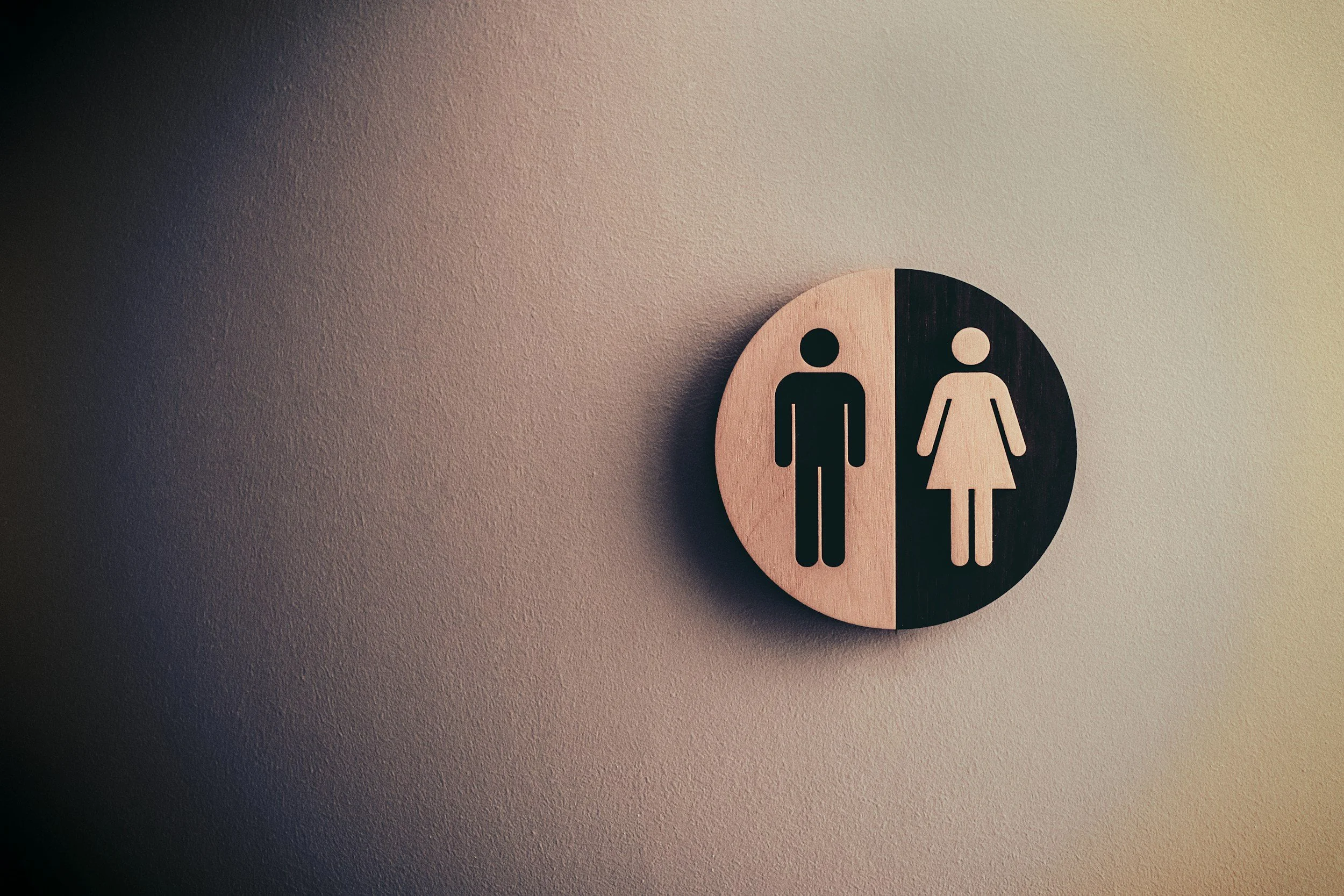
Gendered tpilet signage showing a male and female side-by-side.
Toilets are not neutral spaces
Different people have different needs, and those needs are shaped by lived experience:
Disabled people may require accessible toilets, Changing Places facilities, or ambulant cubicles.
Trans and non-binary people often face harassment or scrutiny in gendered spaces.
People of faith may need facilities that support ablution or privacy.
Parents and carers need family rooms, baby-changing spaces, and room for buggies or mobility aids.
People who menstruate need bins, shelf space, and dignity.
People with stomas or chronic conditions need privacy, space, and appropriate disposal options.
A single toilet type cannot meet this range of needs. Offering a variety of options — gender-neutral cubicles, accessible toilets, Changing Places, family rooms, and culturally considerate facilities — is not an add-on. It is a fundamental part of designing for equity.
“When people avoid using toilets because they feel unsafe or unwelcome, the consequences are real: dehydration, UTIs, stress, and reduced participation in public life. This is a public health issue as much as an inclusion issue.”
Where exclusion shows up most clearly
Toilets are often the place where people feel most vulnerable. For many, they are the site of:
questioning or policing of identity
physical inaccessibility
cultural or religious discomfort
safety concerns
anxiety about being judged or stared at
When people avoid using toilets because they feel unsafe or unwelcome, the consequences are real: dehydration, UTIs, stress, and reduced participation in public life. This is a public health issue as much as an inclusion issue.
Why the built environment must lead
Planners, architects, developers, and asset managers shape the spaces where people live, work, travel, and gather. Their decisions determine who can access a building, how long they can stay, and whether they feel they belong.
1. Toilets influence how people move through and use a place
Good provision enables families to stay longer in public spaces, disabled people to access buildings independently, and trans and non-binary people to feel safe. It supports older people, people with health conditions, and those with caring responsibilities. Toilets are infrastructure that enable participation.
2. Minimum standards are not enough
Regulations set a floor, not a ceiling. Communities, funders, and local authorities increasingly expect spaces to demonstrate inclusive design, cultural sensitivity, and safeguarding considerations. Designing beyond compliance reduces the need for costly retrofits and reputational risk.
3. Toilet design communicates values
A building that offers thoughtful, varied, and accessible toilet options sends a clear message: Everyone belongs here. A building that does not sends an equally clear message.
Intersectionality helps us design better
An intersectional approach moves us away from single-issue thinking — “accessible toilets”, “gender-neutral toilets”, “family toilets”— and towards a holistic understanding of how people’s identities overlap and shape their needs.
It encourages practitioners to ask:
Who is missing from this design?
Who might feel unsafe here?
Who might avoid this space altogether?
How do different identities intersect to create unique barriers?
This is not about designing for every possible scenario. It is about designing with awareness, humility, and care.
“Toilet provision is just one example of why intersectionality matters. But it is a powerful one — because when we get the basics right, we create environments where people can participate fully, safely, and with dignity.”
A resource for the sector
PREACH Inclusion®’s new Intersectionality Guidebook, produced with London Property Alliance and Future Places Studio, offers a practical framework for applying intersectional thinking across the built environment. It explores how identity, power, and place interact, and provides actionable guidance for planners, architects, developers, and asset managers seeking to create spaces that work for everyone.
Toilet provision is just one example of why intersectionality matters. But it is a powerful one — because when we get the basics right, we create environments where people can participate fully, safely, and with dignity.